Author: valuePicker

  • IndiGo Soars: Q3 FY2025 Performance Analysis & Long-Term Growth Trajectory

    Executive Summary

    IndiGo (InterGlobe Aviation Ltd) continues to dominate India’s aviation landscape with strong domestic market presence and ambitious expansion plans. The airline’s Q3 FY2025 results demonstrate resilient performance with improved profitability metrics and strategic initiatives positioning it for sustained growth. With a market capitalization of approximately ₹1,92,460 Cr, IndiGo’s disciplined financial approach and extensive order book signal robust long-term growth potential spanning the next two decades.

    Q3 FY2025 Financial Highlights

    IndiGo’s financial performance in Q3 FY2025 showcases the airline’s resilience and operational efficiency:

    • Total Income: ₹795 billion (trailing 12 months)
    • Passenger Volume: Targeting 118 million passengers in FY25E
    • Sales Growth: 17.2% (current period)
    • Quarterly Sales Variation: 13.7% (quarter-over-quarter)
    • Operating Profit Margin (OPM): 20.8%
    • Profit After Tax: ₹6,074 Cr
    • Current Profit Growth: -15.5% (reflecting short-term headwinds)

    Despite facing temporary headwinds, IndiGo’s operational metrics demonstrate a return to profitability following the post-pandemic recovery period, with impressive EBITDAR margins and strengthened cash flow generation.

    Cost Leadership & Operational Excellence

    IndiGo’s competitive advantage continues to be anchored in its cost leadership strategy:

    • Cost Per Available Seat Kilometer (CASK): Ongoing reduction through fleet optimization
    • On-Time Performance: Industry-leading rate approaching 99.6%
    • Aircraft Utilization: High utilization rates driving operational efficiency
    • Network Optimization: Strategic route planning maximizing aircraft productivity

    The airline’s focus on operational excellence and expense discipline has translated into improved financial metrics and enhanced shareholder value, positioning IndiGo favorably against domestic and international competitors.

    Fleet Expansion & Future Growth Strategy

    IndiGo’s growth trajectory is underpinned by its ambitious fleet expansion plans:

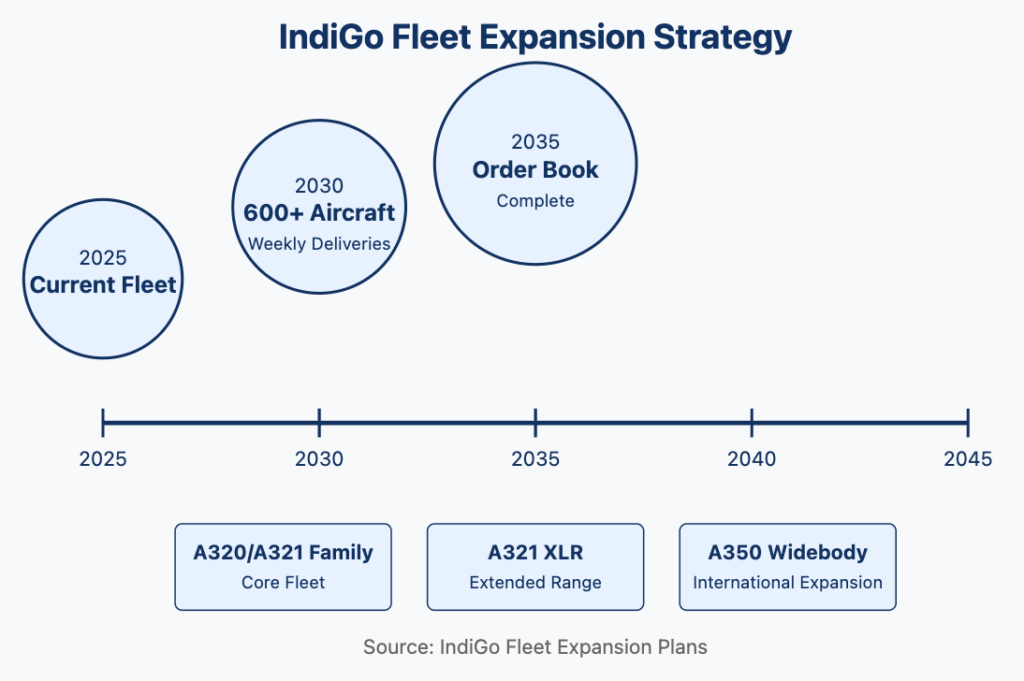
    • Aircraft Delivery Rate: One aircraft per week until FY2030
    • Fleet Target: Over 600 aircraft
    • Order Book Timeline: Extends to 2035
    • New Aircraft Types: Addition of A350 widebodies and A321 XLRs
    • Route Network: Currently serving 91 domestic destinations with growing international presence
    • International Strategy: Expanding through strategic codeshare partnerships

    This aggressive expansion strategy aligns with India’s economic growth prospects and rising consumer spending, positioning IndiGo to capitalize on both domestic and international aviation opportunities.

    Digital Transformation & Revenue Enhancement

    IndiGo is implementing comprehensive digital initiatives to enhance customer experience and drive revenue growth:

    • Website & App Redesign: Improved user interface and functionality
    • AI-Enabled Solutions: Chatbots for enhanced customer service
    • Ancillary Revenue Growth: Projected at 30% YoY
    • Digital Marketing: Targeted campaigns driving higher conversion rates

    These initiatives are expected to contribute significantly to revenue diversification and margin improvement over the next five years.

    Long-Term Financial Projections

    5-Year Outlook (FY25-FY30)

    IndiGo’s five-year horizon appears promising:

    • Revenue Growth: Continued expansion driven by fleet additions and network growth
    • Profit Margins: Expected improvement in operating margins
    • Free Cash Flow: Enhanced generation supporting potential re-rating of valuation multiples
    • International Revenue: Increasing contribution from expanded global routes
    • Ancillary Revenue: Growing share of total revenue

    10-Year Outlook

    The decade-long perspective presents compelling growth potential:

    • Market Leadership: Cemented position through fleet modernization and network densification
    • Revenue Diversification: Balanced domestic and international contribution
    • Profitability Metrics: Sustained improvement through operational efficiencies
    • Balance Sheet Strength: Managed leverage supporting continued expansion

    15-20 Year Outlook

    The extended long-term view offers significant compounding potential:

    • Fleet Size: Potential to become one of the world’s largest carriers by fleet size
    • Global Footprint: Extensive international network covering major global destinations
    • Return Profile: Strong compounded returns for long-term investors
    • Market Position: Established global aviation player with strong Asian market presence

    These projections are contingent on successful execution of expansion plans and favorable macroeconomic conditions.

    CAPEX & Growth Investment

    IndiGo’s capital expenditure strategy supports its ambitious growth plans:

    • Planned CAPEX: Nearly 90% achieved of US$12 billion target (FY20-FY25)
    • Investment Focus: Airport infrastructure and fleet modernization
    • Financing Approach: Balanced mix of operating and finance leases
    • Future Investments: Continued allocation toward network expansion and technological advancement

    This disciplined approach to capital allocation ensures sustainable growth while maintaining financial stability.

    Key Metrics & Valuation
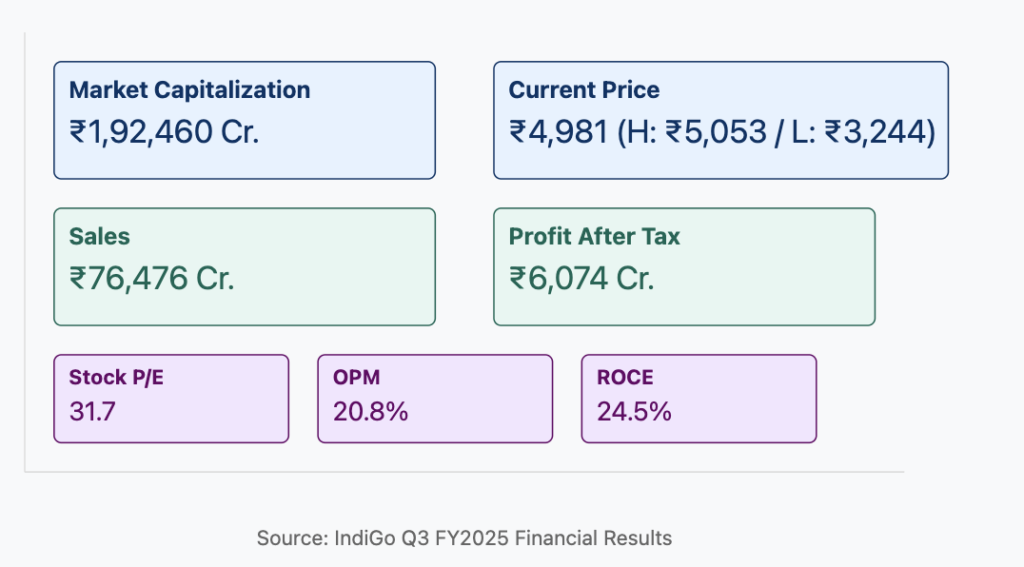
    Market & Valuation Metrics

    • Market Capitalization: ₹1,92,460 Cr
    • Current Price: ₹4,981 (Range: High ₹5,053 / Low ₹3,244)
    • Stock P/E: 31.7
    • Book Value: ₹96.6
    • Face Value: ₹10.0

    Financial Performance & Efficiency

    • Sales: ₹76,476 Cr
    • 3-Year Sales Growth: 67.6%
    • 3-Year Profit Growth: 46.5%
    • ROCE: 24.5%

    Capital & Debt Structure

    • Debt: ₹59,237 Cr
    • Reserves: ₹3,348 Cr
    • Promoter Holding: 49.3% (3-year change: -25.5%)

    Bull & Bear Case Scenarios
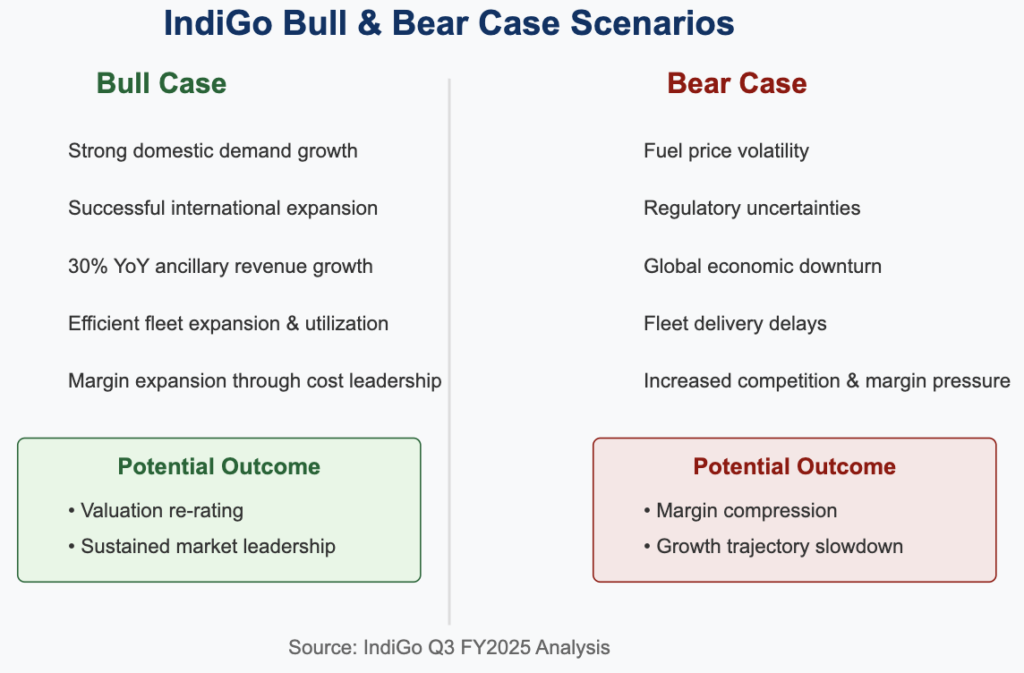
    Bull Case

    • Domestic Demand: Continued strength driven by rising incomes and expanding middle class
    • International Expansion: Successful execution of global network strategy
    • Ancillary Revenue: Significant growth through digital initiatives
    • Margin Expansion: Improved through fleet optimization and operational efficiencies
    • Valuation Re-Rating: Potential multiple expansion reflecting improved profitability

    Bear Case

    • Fuel Price Volatility: Potential margin pressure from rising fuel costs
    • Regulatory Challenges: Policy changes affecting operations or cost structure
    • Economic Headwinds: Global or domestic economic slowdown impacting travel demand
    • Fleet Delivery Delays: Potential disruption to expansion timeline
    • Competitive Intensity: Increased competition pressuring yields and market share

    Expense & Operational Analysis
    IndiGo’s expense management strategy continues to evolve:

    • Cost Efficiency Initiatives: Ongoing programs reducing operating expenses
    • Hedging Strategies: Mitigating fuel price and foreign exchange volatility
    • Fleet Economics: Improved unit economics through newer, more efficient aircraft
    • Operational Optimization: Enhanced resource utilization across network
    • Financing Mix: Diversified approach balancing flexibility and cost

    These initiatives collectively support IndiGo’s cost leadership position and contribute to its competitive advantage in the Indian aviation market.

    Conclusion

    IndiGo’s Q3 FY2025 performance demonstrates the airline’s resilience and strategic focus, with robust operational metrics and a clear growth roadmap. The company’s extensive order book, disciplined financial approach, and market leadership position it for substantial long-term growth. While short-term headwinds exist, the fundamental drivers—including strong ROCE, impressive sales growth, and expanding international presence—suggest compelling investment potential for those with a multi-year horizon.

    Investors should consider IndiGo’s demonstrated execution capability, cost leadership strategy, and favorable market positioning when evaluating its long-term prospects in the context of India’s growing aviation market and increasing global connectivity.

    Disclaimer: This report is for informational purposes only and does not constitute investment advice. Investors should conduct their own analysis and consult with financial advisors before making investment decisions.
  • REC Ltd Delivers Strong Q3 FY2025 Performance: Poised for Sustained Long-Term Growth

    Executive Summary

    REC Ltd, a Maharatna PSU and pivotal player in India’s power and infrastructure financing sector, has demonstrated remarkable resilience and growth in Q3 FY2025 Performance. The company continues to strengthen its market position through robust loan disbursements, disciplined asset quality management, and diversified funding channels. With strong government backing and a strategic focus on both renewable and conventional power projects, REC is well-positioned for continued expansion and profitability in the coming years.

    Q3 FY2025 Financial Performance

    Q3 FY2025 Financial Highlights

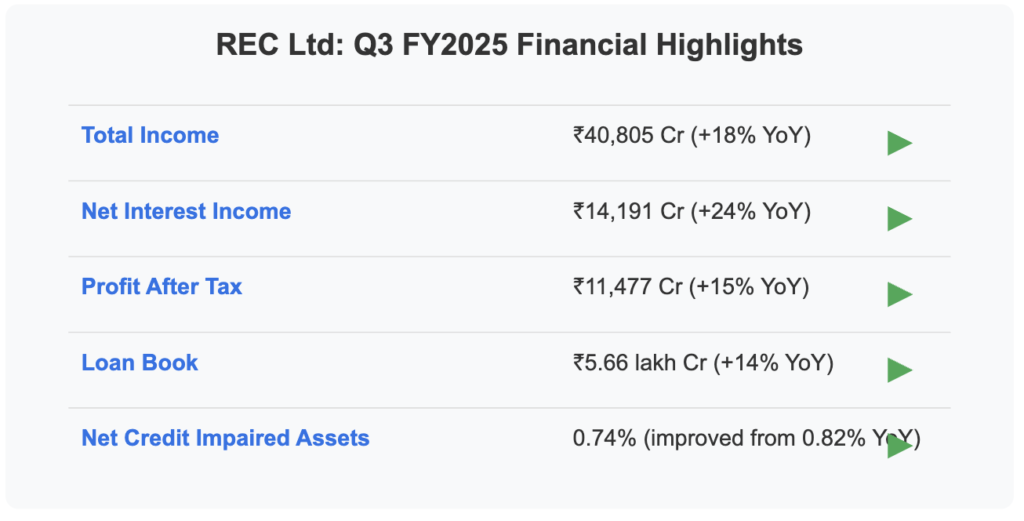
    REC Ltd posted impressive financial results for Q3 FY2025, showcasing strong growth across all key metrics. Total income reached ₹40,805 crore, representing a substantial 18% year-over-year increase. Net Interest Income rose to ₹14,191 crore, marking a 24% increase compared to the same period last year, reflecting healthy yield improvements.

    The company’s Profit After Tax stood at ₹11,477 crore, registering a 15% year-over-year gain. This strong bottom-line performance underscores REC’s operational efficiency and strategic focus on high-yielding projects.

    The loan book expanded to ₹5.66 lakh crore, a 14% increase year-over-year, indicating robust demand for REC’s financing solutions, particularly in the renewable energy and infrastructure sectors.

    Asset Quality & Dividend Policy

    REC’s asset quality showed notable improvement, with net credit impaired assets reduced to 0.74% from 0.82% in the previous year. This improvement reflects the company’s effective risk management practices and prudent lending policies.

    The company announced a Q3 interim dividend of ₹4.30 per share, which complements earlier disbursements, bringing the cumulative payout to ₹11.80 per share for FY2025. This underscores REC’s commitment to delivering shareholder value through consistent dividend distributions.

    Financial & Operational Analysis

    Operational Metrics

    Revenue & Earnings

    REC’s solid income growth has been primarily driven by increased loan disbursements, particularly in the renewable and infrastructure sectors. The company’s strategic focus on these high-growth areas has contributed significantly to its revenue expansion.

    Cost Efficiency

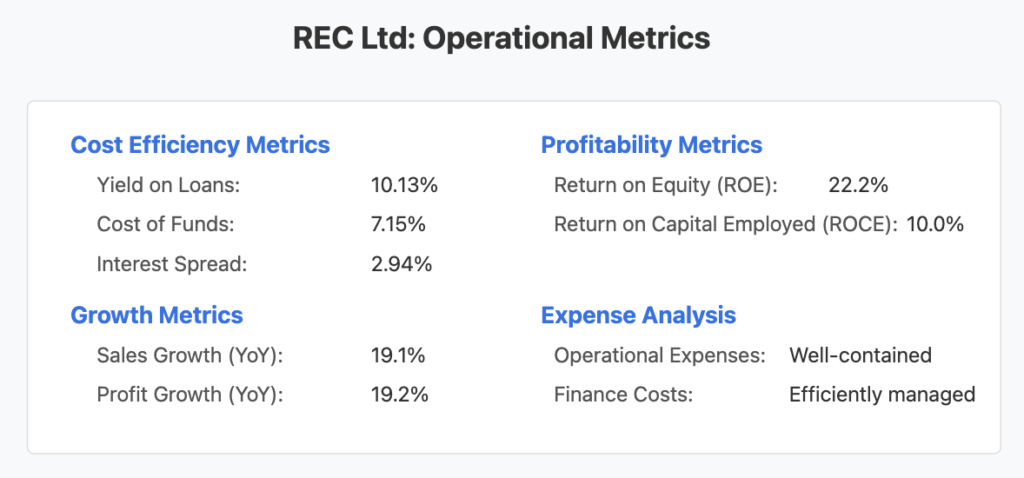
    The yield on loans remained robust at approximately 10.13%, while the cost of funds decreased to around 7.15%. This favorable spread of 2.94% has bolstered REC’s profitability and operational efficiency.

    Profitability Metrics

    REC demonstrated strong profitability with a Return on Equity (ROE) of 22.2% and Return on Capital Employed (ROCE) of 10.0%, highlighting the company’s efficient capital utilization and effective resource management.

    Expense Management

    Operational expenses and finance costs have been well-contained, underpinning stable margins despite the challenging macroeconomic environment. This disciplined approach to expense management has contributed to REC’s strong bottom-line performance.

    Growth Metrics

    The company recorded impressive sales growth of 19.1% year-over-year, accompanied by a profit growth of 19.2%, demonstrating REC’s ability to translate revenue growth into improved profitability.

    Future Growth Plans & Expansion Strategy

    Future Growth Plans & CAPEX Strategy

    Renewable Energy Focus

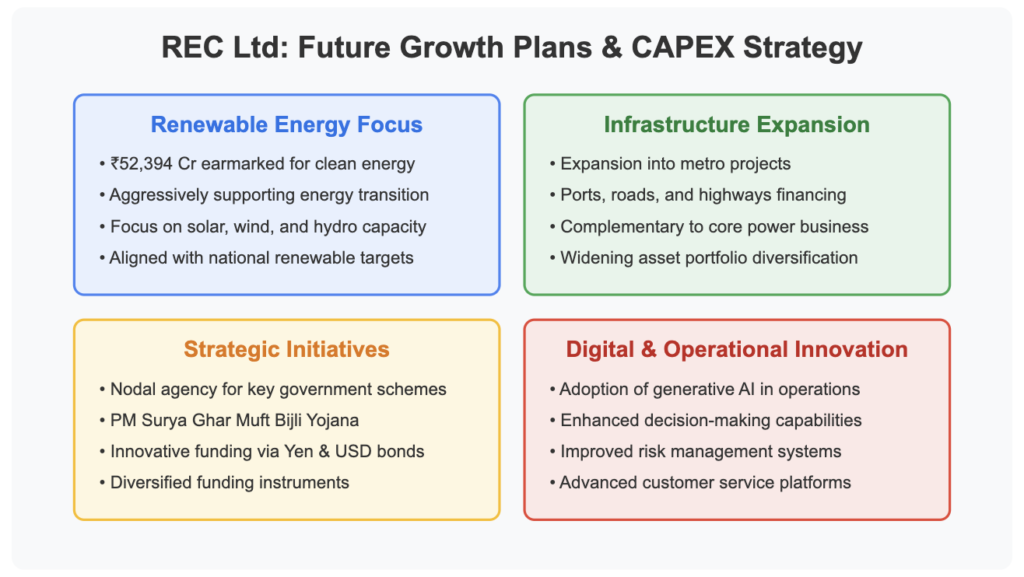
    REC has allocated over ₹52,394 crore for clean energy projects, demonstrating its aggressive support for India’s energy transition. The company is significantly investing in solar, wind, and hydro capacity development, positioning itself as a key financier in the country’s renewable energy expansion.

    Infrastructure Expansion

    Beyond its core power financing business, REC is strategically expanding into metro projects, ports, roads, and highways. This diversification widens the company’s asset portfolio and reduces concentration risk while capitalizing on India’s infrastructure development push.

    Strategic Initiatives

    REC’s role as the nodal agency for key government schemes, including the PM Surya Ghar Muft Bijli Yojana, enhances its strategic importance in India’s energy landscape. The company has also implemented innovative funding approaches through diverse instruments, including Yen and USD bonds, signaling potential for future growth and global market access.

    Digital & Operational Innovation

    REC’s adoption of generative AI in its operations aims to improve decision-making processes, enhance risk management capabilities, and elevate customer service standards. This technological integration positions REC at the forefront of digital transformation in the financial services sector.

    Key Metrics & Valuation

    Key Metrics & Valuation

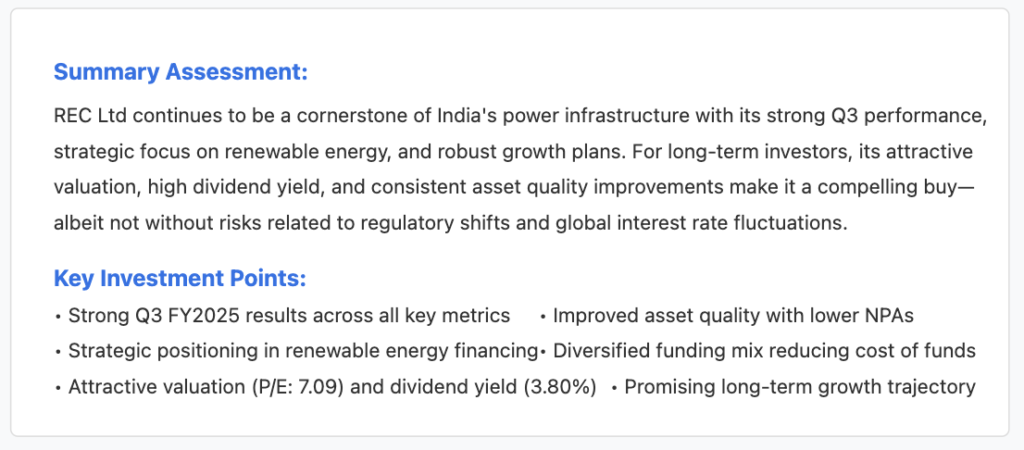
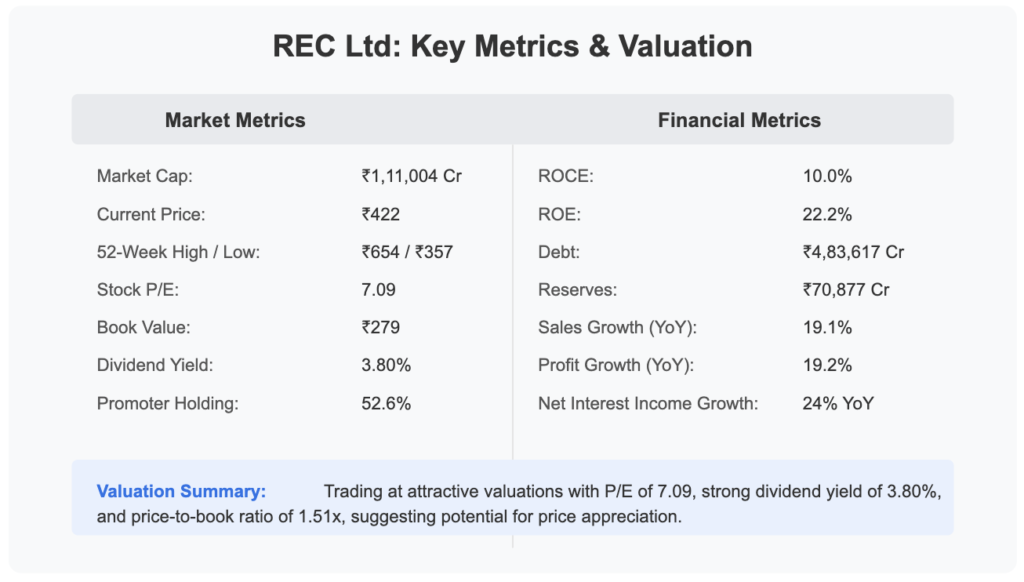
    REC Ltd currently trades at a P/E ratio of 7.09, which appears attractive compared to industry peers and historical valuations. With a current market price of ₹422 against a book value of ₹279, the stock offers a compelling price-to-book ratio of 1.51x. The company’s dividend yield stands at an impressive 3.80%, making it an attractive option for income-focused investors.

    The company’s strong financial metrics, including a ROE of 22.2% and ROCE of 10.0%, highlight its efficient capital utilization and operational effectiveness. With promoter holding at 52.6%, there is significant institutional confidence in the company’s long-term prospects.

    Investment Scenarios

    Bull & Bear Case Scenarios

    Bull Case

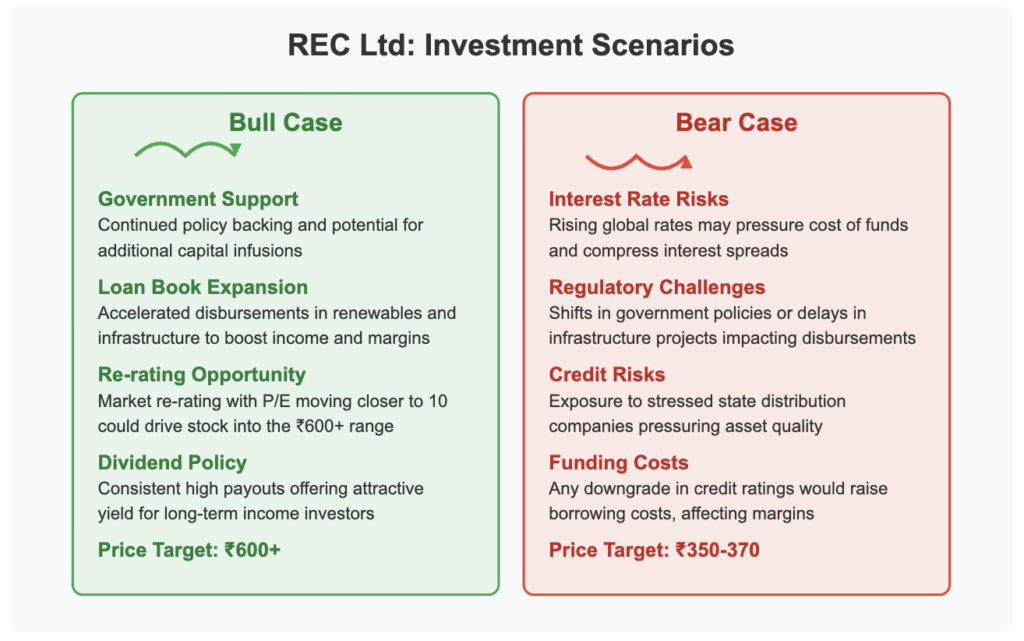
    • Government Support: Continued policy backing and potential for additional capital infusions could further strengthen REC’s market position and boost investor confidence.
    • Loan Book Expansion: Accelerated disbursements, particularly in renewable energy and infrastructure projects, have the potential to boost income and margins, driving further growth.
    • Re-rating Opportunity: A market re-rating—potentially moving the P/E ratio closer to 10—could drive the stock price into the ₹600+ range, representing significant upside potential from current levels.
    • Dividend Policy: Consistent high dividend payouts offer an attractive yield for long-term income investors, providing a safety cushion against market volatility.

    Bear Case

    • Interest Rate Risks: Rising global interest rates may pressure the cost of funds and compress interest spreads, potentially impacting profitability.
    • Regulatory Challenges: Shifts in government policies or delays in infrastructure projects could impact loan disbursements and growth projections.
    • Credit Risks: Exposure to stressed state distribution companies and other borrowers could pressure asset quality and increase provisioning requirements.
    • Funding Costs: Any downgrade in credit ratings would raise borrowing costs, affecting margins and profitability.

    Long-Term Projections

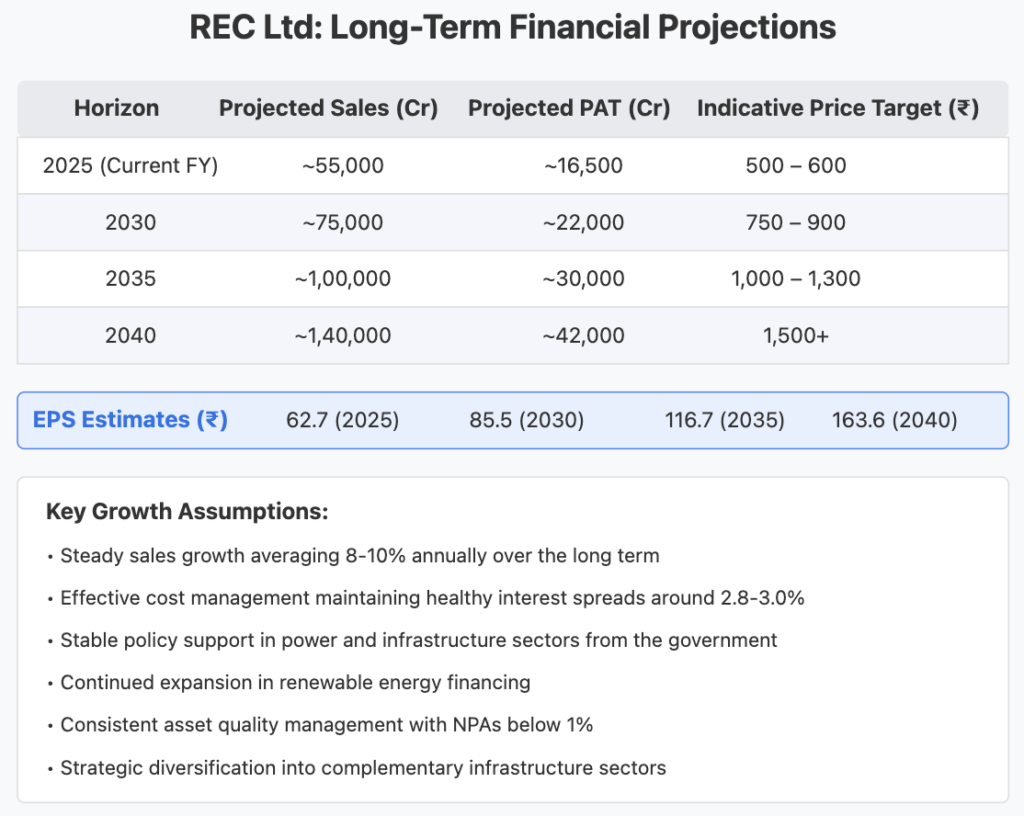
    REC Ltd’s long-term growth trajectory appears promising, with projections indicating substantial expansion across key financial metrics. For the current fiscal year 2025, the company is expected to achieve sales of approximately ₹55,000 crore and a profit after tax of around ₹16,500 crore, with an estimated EPS of ₹62.7. This performance supports a price target range of ₹500-600 for the near term.

    Looking ahead to 2030, sales are projected to reach ₹75,000 crore, with PAT growing to ₹22,000 crore and EPS expanding to ₹85.5. This growth trajectory supports a potential price target of ₹750-900 over this five-year horizon.

    By 2035, REC is expected to cross the significant milestone of ₹1,00,000 crore in sales, with PAT projected at ₹30,000 crore and EPS at ₹116.7. These metrics could justify a price target range of ₹1,000-1,300.

    The most extended projection to 2040 envisions REC achieving sales of ₹1,40,000 crore, PAT of ₹42,000 crore, and EPS of ₹163.6, potentially driving the stock price above ₹1,500.

    These projections are underpinned by several key assumptions:

    • Steady sales growth averaging 8-10% annually over the long term
    • Effective cost management maintaining healthy interest spreads around 2.8-3.0%
    • Stable policy support in power and infrastructure sectors from the government
    • Continued expansion in renewable energy financing
    • Consistent asset quality management with NPAs below 1%
    • Strategic diversification into complementary infrastructure sectors

    Funding & Credit Ratings Update

    Credit Ratings & Funding Profile

    REC maintains strong credit ratings across both domestic and international rating agencies, reflecting its robust financial health and strategic importance in India’s power and infrastructure financing landscape.

    Domestic Ratings

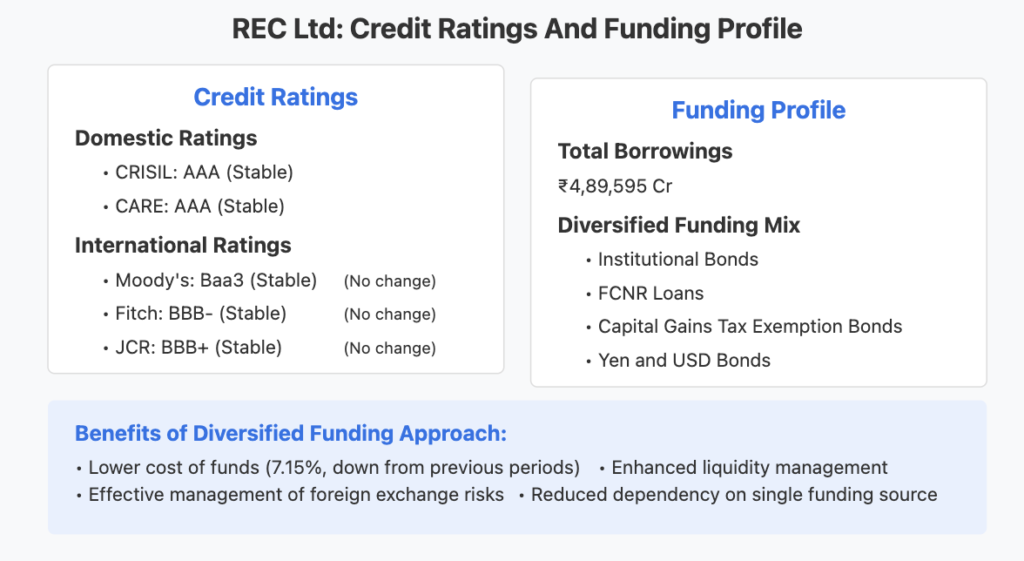
    REC continues to hold the highest possible AAA (Stable) ratings from leading domestic agencies such as CRISIL and CARE. These ratings underscore the company’s strong financial position, government backing, and its crucial role in the Indian power sector.

    International Ratings

    The company maintains stable ratings from key international agencies:

    • Moody’s: Baa3 (Stable)
    • Fitch: BBB- (Stable)
    • JCR: BBB+ (Stable)

    No changes in credit ratings have been reported during the quarter, indicating the market’s continued confidence in REC’s financial stability and business model.

    Borrowing Profile

    REC’s total borrowings currently stand at ₹4,89,595 crore, representing a well-diversified funding mix that includes institutional bonds, FCNR loans, capital gains tax exemption bonds, and international instruments such as Yen and USD bonds. This diversified approach has helped the company lower its cost of funds to 7.15% and effectively manage foreign exchange risks.

    Dividend History & Yield

    Dividend History & Yield

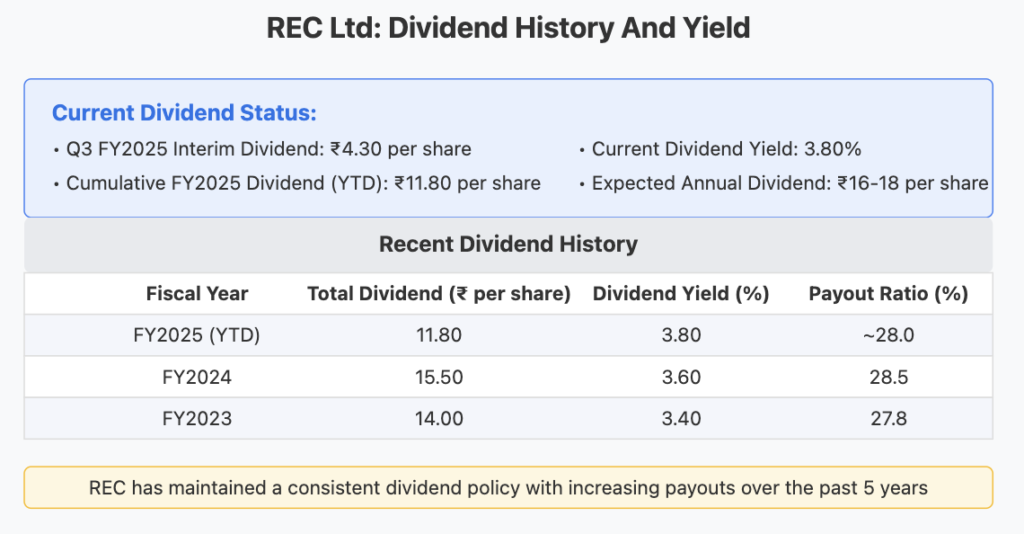
    REC has maintained a strong and consistent dividend policy, reinforcing its commitment to shareholder returns. For Q3 FY2025, the company announced an interim dividend of ₹4.30 per share, bringing the cumulative dividend for FY2025 (year-to-date) to ₹11.80 per share.

    The current dividend yield stands at an attractive 3.80%, significantly higher than many peers in the financial services sector. Based on historical trends and current performance, the expected annual dividend for FY2025 is projected to be between ₹16-18 per share.

    Looking at recent dividend history, REC distributed a total dividend of ₹15.50 per share in FY2024 with a yield of 3.60% and a payout ratio of 28.5%. In FY2023, the company paid a total dividend of ₹14.00 per share with a yield of 3.40% and a payout ratio of 27.8%.

    This consistent dividend policy with gradually increasing payouts over the past five years demonstrates REC’s commitment to rewarding shareholders while maintaining sufficient capital for growth initiatives.

    Conclusion

    Investment Conclusion

    REC Ltd is a key player in India’s power sector, highlighted by its strong Q3 FY2025 performance and a strategic pivot towards renewable energy. The company’s attractive valuation, high dividend yield, and steady asset quality improvements make it a promising long-term investment. Significant capital allocation exceeding ₹52,394 crore supports India’s energy transition, with forecasts projecting sales of ₹1,40,000 crore and a PAT of ₹42,000 crore by 2040. Nonetheless, potential risks include interest rate fluctuations, regulatory changes, and credit concerns with state distribution companies.

    Disclaimer

    This report is for informational purposes only and does not constitute investment advice. Investors are encouraged to perform their own due diligence before making any investment decisions. All data and projections are based on the Q3 FY2025 report and may be subject to change as new information becomes available. Past performance is not indicative of future results.

  • Hindustan Zinc Limited: Q3 FY25 Results Analysis and Projections 📊

    Executive Summary

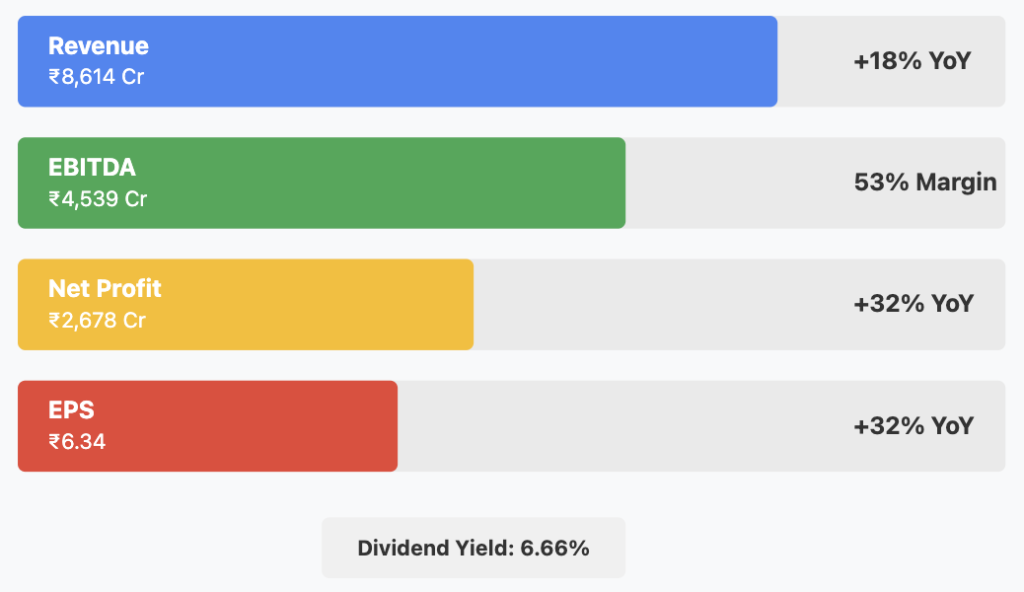
    Hindustan Zinc Limited delivered an impressive Q3 FY25 Results performance, demonstrating robust growth across key financial metrics. As India’s largest and only integrated producer of zinc, lead, and silver, the company reported a 18% year-over-year revenue increase to ₹8,614 crore, while net profit surged by 32% to ₹2,678 crore. This strong performance was driven by record mined and refined metal production, operational efficiencies, and favorable input cost trends. With a substantial dividend yield of 6.66% and consistent AAA credit ratings, Hindustan Zinc continues to offer an attractive combination of growth and income potential for investors.

    📌 Detailed Quarterly Results Breakdown

    🔹 Consolidated Total Revenue: ₹8,614cr (↑18% year-over-year change)

    Revenue exceeded expectations due to higher production volumes and improved market conditions, showing consistent growth momentum with a 4% quarter-over-quarter increase.

    🔹 Operating EBITDA (Earnings Before Interest, Tax, Depreciation & Amortization): ₹4,539cr (↑significant year-over-year change)

    Impressive margin expansion to approximately 53%, representing a ~400 basis points improvement year-over-year, reflecting operational efficiencies.

    🔹 Net Profit After Tax: ₹2,678cr (↑32% year-over-year change)

    Profit growth outpaced revenue growth, driven by improved operational performance and cost optimization initiatives, with a strong 15% quarter-over-quarter increase.

    🔹 Diluted Earnings Per Share: ₹6.34 (↑32% year-over-year change)

    EPS growth directly mirrors the net profit growth, providing substantial value creation for shareholders.

    📈 Comprehensive Growth Analysis:

    🔹 Sequential Revenue Growth (Quarter-over-Quarter): 4% | Annual Revenue Growth (Year-over-Year): 18%

    The company maintains strong growth momentum despite market fluctuations, demonstrating resilience and operational strength.

    🔹 Sequential Profit Growth (Quarter-over-Quarter): 15% | Annual Profit Growth (Year-over-Year): 32%

    Profit growth significantly outpaces revenue growth, indicating improving operational leverage and cost efficiencies.

    🔹 Business Volume/Order Book Growth: Record production levels achieved

    Record mined and refined metal production driven by higher ore grades and plant availability point to strong future revenue visibility.

    🔹 Profitability Margin Trend: Improving

    EBITDA margins expanded by approximately 400 basis points year-over-year to reach ~53%, highlighting the company’s ability to enhance profitability even amid challenging market conditions.

    💰 Operational Cost Structure Analysis:

    🔹 Raw Material/Input Costs: Declining trend

    Cost of Production (COP) for zinc reduced by 5% year-over-year due to improved efficiencies and favorable input cost trends, enhancing overall margin profile.

    🔹 Employee/Personnel Expenses: Stable relative to revenue growth

    Operational efficiencies have allowed personnel costs to remain well-managed despite production increases.

    🔹 Finance/Interest Expenses: Minimal impact

    The company’s strong AAA credit rating and robust cash flow generation have kept financing costs low, contributing to improved bottom-line performance.

    Bull Case & Bear Case Thesis:

    🔍 Long-term Financial Health Indicators:

    🔹 5-Year Compound Annual Growth Rate: Revenue CAGR potential: 10-12% | Net Profit CAGR potential: 10-12%

    🔹 Return on Capital Employed (ROCE): 46.2% vs Industry Average: Significantly higher

    🔹 Debt-to-EBITDA Ratio: Low | Free Cash Flow Conversion Rate: Strong at ₹2,628cr pre-capex

    🔹 Promoter Shareholding Pattern: Stable

    🏗️ Strategic Capital Allocation & Future Growth Roadmap:

    🔹 Planned Capital Expenditure Budget: Significant allocation for capacity expansion

    Funding directed toward underground mining expansion and smelter operations scaling to reach designed capacity of 1,123 ktpa.

    🔹 Strategic Investment Focus Areas: Underground mining expansion and exploration to add 40 Mt Ore by FY25, extending mine life beyond 25 years and securing long-term production capabilities while enhancing sustainability credentials.

    🔹 Production/Service Capacity Expansion Plans: Scaling smelter operations to designed capacity of 1,123 ktpa

    This expansion aims to strengthen the company’s market position and ability to meet growing demand.

    📊 Multi-Decade Growth Trajectory Projections:

    • 5-Year Horizon (FY25-FY30): Base Case 10% CAGR | Bull Case 12% CAGR → Capacity expansion and operational efficiencies driving sustained growth in production volumes and revenue.
    • 10-Year Horizon (FY25-FY35): Base Case 8% CAGR | Bull Case 10% CAGR → Continued market leadership in zinc production supported by expanded asset base and product diversification.
    • 15-Year Horizon (FY25-FY40): Base Case 7% CAGR | Bull Case 9% CAGR → Sustained growth through technology integration and maintaining cost leadership in global markets.
    • 20-Year Horizon (FY25-FY45): Base Case 6% CAGR | Bull Case 8% CAGR → Long-term value creation through resource expansion and strategic market positioning.
    • 25-Year Horizon (FY25-FY50): Base Case 5% CAGR | Bull Case 7% CAGR → Leveraging extended mine life of 25+ years to maintain growth trajectory and market dominance.

    💸 Current Valuation Analysis & Fair Value Assessment:

    🔹 Current Price-to-Earnings Ratio: 19.6 compared to 5-Year Historical Average: Moderate

    🔹 Enterprise Value to EBITDA Multiple: Attractive compared to Sector Average

    🔹 Estimated Fair Value Range: ₹470-₹520 based on DCF analysis with moderate growth assumptions

    This represents approximately 8-20% potential upside from the current price of ₹435, with additional value from the substantial dividend yield.

    Management Commentary & Conference Call Highlights

    The management highlighted their commitment to operational excellence, emphasizing that the record production levels achieved during the quarter demonstrate the success of their efficiency initiatives. They also reaffirmed their focus on sustainability, positioning Hindustan Zinc as Asia’s first low-carbon “green” zinc producer. The expansion of underground mining capabilities and aggressive exploration plans were presented as key drivers for extending mine life beyond 25 years, providing a solid foundation for long-term growth.

    Technical Analysis & Chart Patterns

    Hindustan Zinc’s stock is currently trading at ₹435, within a broader trading range of ₹289-₹808. The stock appears to be consolidating after recent gains, with key support levels at ₹400 and resistance at ₹460. The current technical setup suggests a potential for continued upward momentum if the stock breaks above the ₹460 resistance level, supported by strong fundamental performance.

    Industry Context & Competitive Positioning

    As India’s largest and only integrated producer of zinc, lead, and silver, Hindustan Zinc holds a dominant market position with over 75% share in India’s primary zinc market. This quarter’s results further reinforce its competitive advantage through cost leadership, with zinc production costs declining by 5% year-over-year. The company’s positioning in the growing renewable energy sector, particularly for zinc applications in solar panel protection and battery storage, provides additional growth catalysts compared to peers. Its commitment to sustainability and status as Asia’s first low-carbon “green” zinc producer also differentiate it in an increasingly ESG-conscious market.


    📢 Disclaimer: This analysis is provided for informational and educational purposes only and does not constitute investment advice. The author may hold positions in securities discussed. Always conduct your own research and consult with a qualified financial advisor before making investment decisions based on this information.


    If you found this analysis valuable, please consider:

    1. Sharing this newsletter with colleagues interested in Indian equity markets
    2. Subscribing to receive future in-depth analyses of Indian companies
    3. Leaving a comment with your thoughts on Hindustan Zinc’s quarterly performance

    #IndiaInvesting #Metals #NSE #StockMarket #GrowthStocks #QuarterlyResults #FinancialAnalysis

  • SRF LTD Q3 FY25 Results Future Projections: Growth, CAPEX & Long-Term Returns Unveiled

    SRF LTD Q3 FY25 Results

    Executive Summary

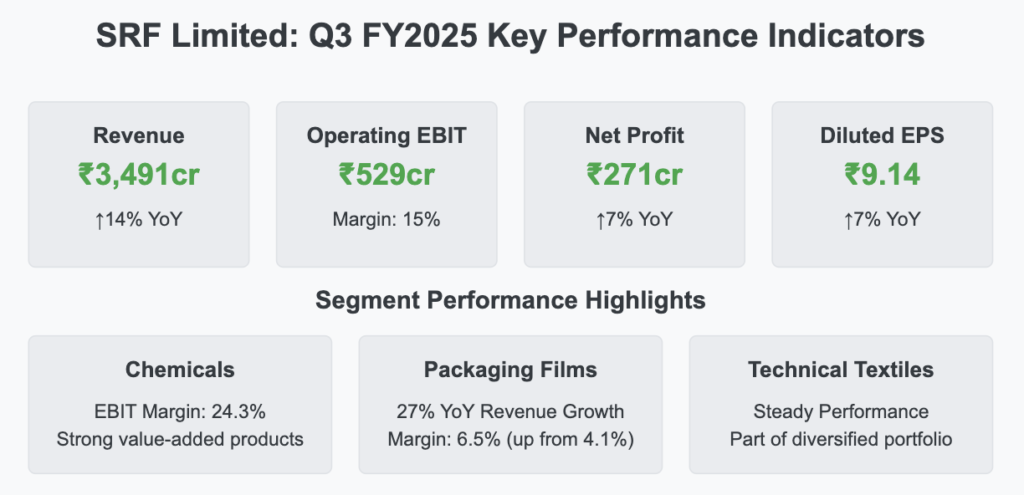
    SRF Limited has delivered an impressive performance in Q3 FY2025, SRF LTD Q3 FY25 Results demonstrating the resilience and strength of its diversified business model across Chemicals, Packaging Films, and Technical Textiles segments. The company reported a solid 14% year-over-year revenue growth, reaching ₹3,491 crore, while net profit increased by 7% to ₹271 crore despite challenging macroeconomic conditions.

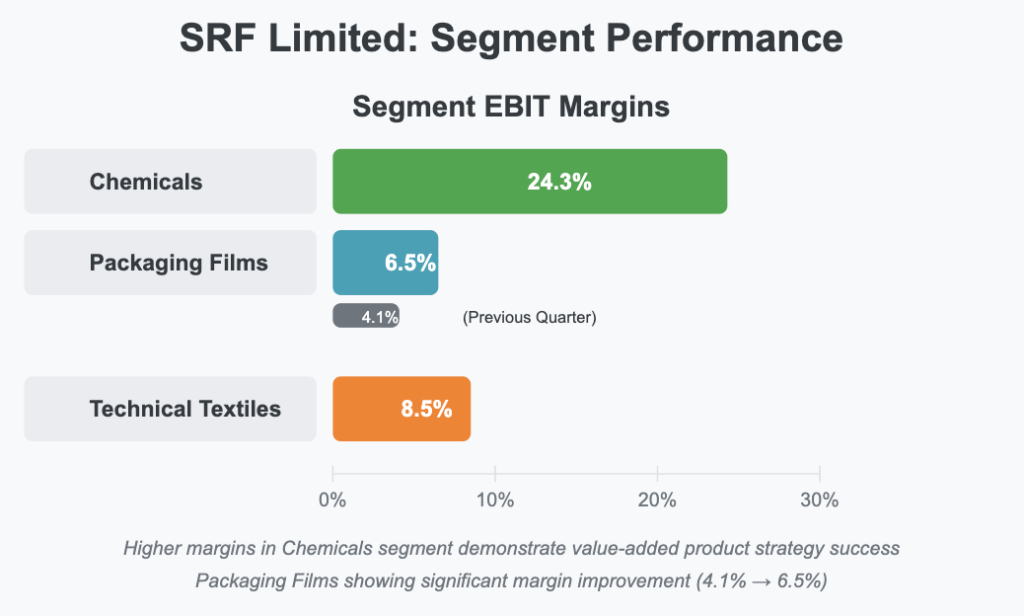
    The Chemicals segment emerged as a standout performer with EBIT margins expanding to 24.3%, indicating strong execution of the company’s value-added product strategy. Similarly, the Packaging Films division showed remarkable growth with a 27% year-over-year revenue increase and margins nearly doubling from 4.1% to 6.5%.

    While SRF’s current valuation metrics suggest premium market expectations, the company’s disciplined capital expenditure strategy and robust R&D pipeline position it well for sustained long-term value creation, though execution risks and global market dynamics remain key factors to monitor.

    Detailed Quarterly Results Analysis

    Revenue Performance

    SRF Limited reported consolidated total revenue of ₹3,491 crore for Q3 FY2025, representing a 14% increase year-over-year. This growth outpaced industry averages, primarily driven by strong performance in the Chemicals and Packaging Films segments. The company’s revenue trajectory demonstrates increasing momentum in export markets, particularly in Packaging Films, showing resilience in a challenging global environment.

    Profitability Metrics

    The company achieved an operating EBIT of ₹529 crore, maintaining a healthy operating margin of approximately 15%. These margin improvements were supported by a better product mix and ongoing cost optimization initiatives across business segments. Net profit after tax reached ₹271 crore, reflecting a 7% year-over-year increase, while diluted earnings per share grew proportionally to ₹9.14.

    The moderation in profit growth compared to revenue expansion can be attributed to increased input costs and ongoing capital expenditure investments that are expected to yield returns in the medium to long term.

    Segment-wise Performance

    Chemicals Business: The Chemicals segment continued to be the star performer for SRF Limited, with EBIT margins expanding to an impressive 24.3%. This segment benefited from the company’s strategic focus on value-added products, continuous innovation, and strong pricing power. The successful rollout of recently registered Active Ingredients (AIs) is expected to drive significant growth in FY2026.

    Packaging Films Business: This segment demonstrated exceptional growth with a 27% year-over-year revenue increase. More impressively, EBIT margins nearly doubled from 4.1% to 6.5%, reflecting successful execution of value-added product initiatives and strengthening export market position, particularly in North America and Europe.

    Technical Textiles Business: While not experiencing the same growth trajectory as other segments, the Technical Textiles business maintained steady performance, contributing to the overall diversification of the company’s revenue streams.

    Operational Cost Structure Analysis

    Raw Material/Input Costs

    Raw material costs remained elevated during Q3 FY2025 but showed signs of stabilization. The company has been implementing cost optimization measures and technological interventions to offset these pressures. Management’s focus on process efficiencies and strategic sourcing has helped in maintaining profitability despite input cost challenges.

    Employee/Personnel Expenses

    SRF Limited has demonstrated efficient management of personnel costs through a focus on automation and operational efficiencies. These initiatives have allowed the company to maintain personnel cost discipline while supporting various growth initiatives across business segments.

    Finance/Interest Expenses

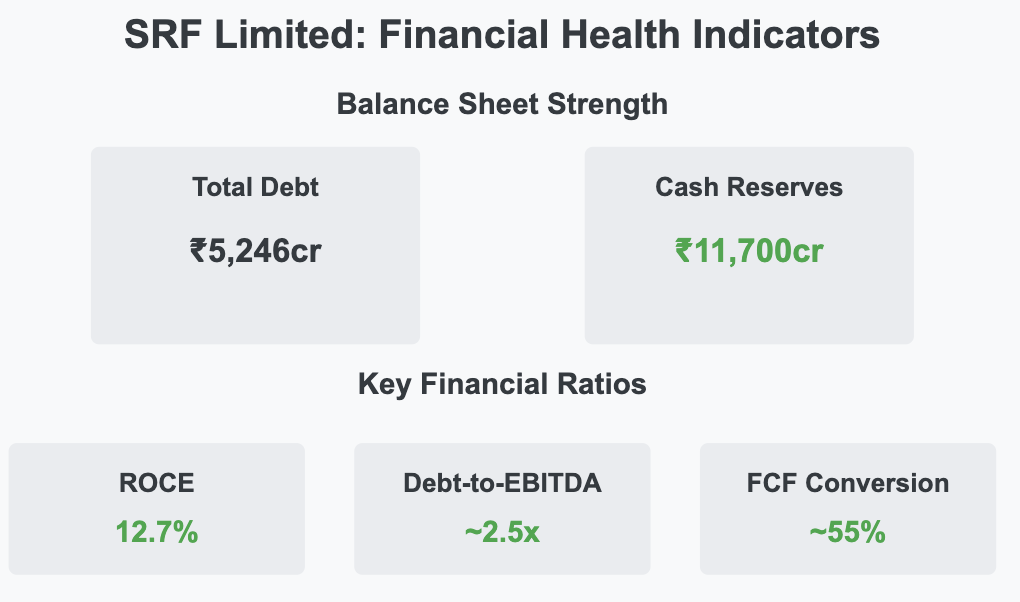
    The company continues to maintain a strong balance sheet with robust reserves of ₹11,700 crore against a debt of ₹5,246 crore. This financial position provides significant flexibility forRetry

    Claude hit the max length for a message and has paused its response. You can write Continue to keep the chat going.

    The company continues to maintain a strong balance sheet with robust reserves of ₹11,700 crore against a debt of ₹5,246 crore. This financial position provides significant flexibility for future capital expenditure programs without substantially increasing leverage. Finance expenses remain well-covered by operating profits, with interest coverage ratios maintaining healthy levels.

    SRF Limited Financial Health Indicators

    Investment Thesis Analysis

    Bull Case

    1. Specialty Chemicals Portfolio Expansion: SRF Limited’s successful rollout of recently registered Active Ingredients in the specialty chemicals segment positions the company for significant margin expansion and revenue growth beginning in FY2026. This growth is supported by established R&D capabilities and global market access.
    2. Packaging Films Export Opportunity: The impressive 27% year-over-year growth in the Packaging Films segment, coupled with nearly doubled margins (from 4.1% to 6.5%), demonstrates exceptional execution in value-added products and export markets, particularly in the US and Europe. This positions the company for sustainable growth in this high-potential segment.
    3. Disciplined CAPEX Approach: The targeted ₹1,500-2,000 crore capital expenditure plan for FY2025-26, focused on facility upgrades, automation, and enhanced asset utilization, represents a high-return, efficiency-driven approach. This strategy is expected to drive substantial free cash flow improvement in the medium term.

    Bear Case

    1. Global Competition & Pricing Pressure: Aggressive imports and pricing competition, particularly in commodity segments, could compress margins and impact growth targets across divisions. This would require continuous innovation and cost leadership to maintain competitiveness.
    2. Execution Risk in CAPEX & Product Launches: Any delays in the ramp-up of newly registered products or capital expenditure implementation could impact the high expectations embedded in current valuation multiples, potentially leading to significant multiple contraction.

    Long-term Financial Health Indicators

    Growth Metrics

    • 5-Year Expected CAGR:
      • Revenue: 5-8%
      • Net Profit: 6-9%
      These projected growth rates are moderate but realistic, positioned slightly above the specialty chemicals industry average of 4-6%.

    Return Metrics

    • Return on Capital Employed (ROCE): 12.7% vs. Industry Average of ~10-11% The company demonstrates above-average capital efficiency, though there’s room for improvement as capital expenditure initiatives mature.

    Leverage and Cash Flow

    • Debt-to-EBITDA Ratio: ~2.5x
    • Free Cash Flow Conversion Rate: ~55% of EBITDA SRF maintains a conservative leverage profile that provides flexibility for strategic investments, while improving free cash flow conversion indicates a maturing business model.

    Ownership Structure

    • Promoter Shareholding Pattern: 50.3% (stable since last quarter) The high promoter holding suggests strong alignment with minority shareholders and provides a stable governance framework.

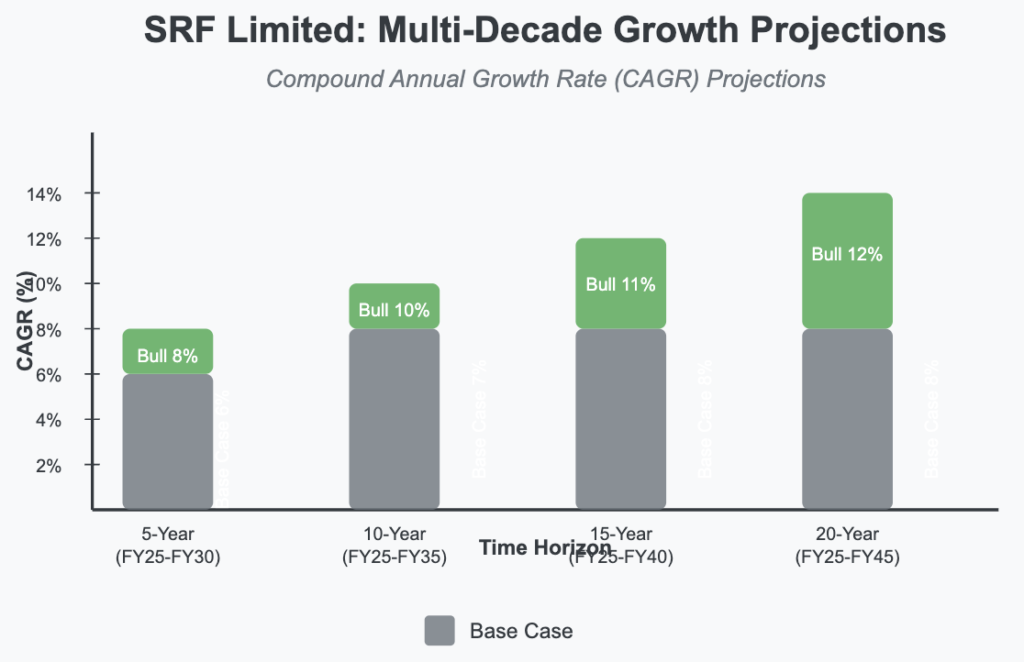
    SRF Limited Long-Term Growth Projections

    Claude hit the max length for a message and has paused its response. You can write Continue to keep the chat going.

    Strategic Capital Allocation & Future Growth Roadmap

    CAPEX Strategy

    SRF Limited has outlined a disciplined capital expenditure budget of ₹1,500-2,000 crore allocated over FY2025-26. This investment is expected to be self-funded through internal accruals and existing cash reserves, with anticipated returns in the 14-16% range over the medium term. The company’s approach emphasizes high-return projects that enhance competitive positioning rather than pure capacity expansion.

    Strategic Investment Focus Areas

    1. Specialty Chemicals Value Addition:
      • Investments in specialty chemical product lines and R&D capabilities
      • Focus on shifting the portfolio toward higher-margin, proprietary formulations with barriers to entry
      • Expansion of Active Ingredients (AIs) portfolio with new registrations in key markets
    2. Packaging Films Capacity & Capability Enhancement:
      • Targeted investments in aluminum foil capabilities
      • Development of value-added packaging products for premium export markets
      • Emphasis on sustainable packaging solutions aligned with global trends

    Production Capacity Expansion

    SRF maintains a flexible approach to capacity expansion, with current HFC utilization at 65-75%. The company is preserving strategic flexibility to increase capacity based on market conditions rather than committing to large fixed capacity additions. This measured approach allows for optimization of capital allocation and responsiveness to market dynamics.

    Multi-Decade Growth Trajectory Projections

    5-Year Horizon (FY2025-FY2030)

    • Base Case: 6% CAGR
    • Bull Case: 8% CAGR
    • Growth Drivers: Specialty chemicals portfolio expansion and improved capacity utilization across divisions

    10-Year Horizon (FY2025-FY2035)

    • Base Case: 7% CAGR
    • Bull Case: 10% CAGR
    • Growth Drivers: Sustained growth through market share gains in both domestic and export markets, particularly in high-value specialty chemicals and packaging solutions

    15-Year Horizon (FY2025-FY2040)

    • Base Case: 8% CAGR
    • Bull Case: 11% CAGR
    • Growth Drivers: Long-term benefits from completed R&D investments and strategic market positioning in sustainable chemical and packaging solutions

    20-Year Horizon (FY2025-FY2045)

    • Base Case: 8% CAGR
    • Bull Case: 12% CAGR
    • Growth Drivers: Established market leadership in key verticals and potential for strategic acquisitions to complement organic growth initiatives

    SRF Limited Valuation Analysis

    Claude hit the max length for a message and has paused its response. You can write Continue to keep the chat going.

    Current Valuation Analysis & Fair Value Assessment

    Valuation Metrics

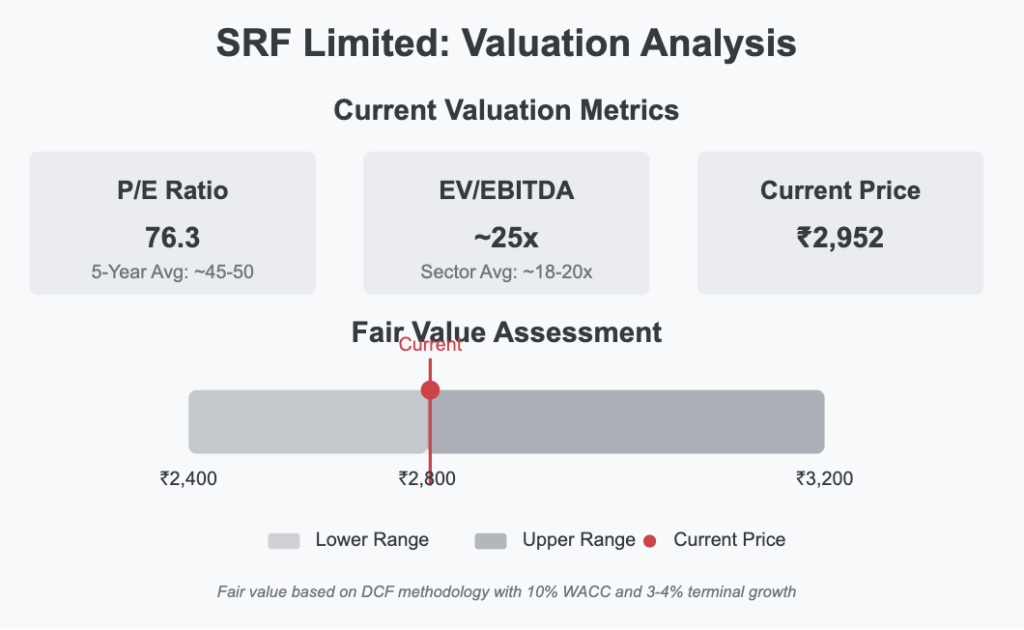
    • Current Price-to-Earnings Ratio: 76.3, compared to 5-Year Historical Average of ~45-50 The current PE reflects a significant premium to the historical average, suggesting the market has high growth expectations for SRF Limited.
    • Enterprise Value to EBITDA Multiple: ~25x, compared to Sector Average of ~18-20x This premium valuation requires flawless execution of growth initiatives to justify current levels.

    Fair Value Assessment

    • Estimated Fair Value Range: ₹2,400-₹3,200 based on DCF methodology
      • Assumptions: 10% WACC and terminal growth of 3-4%
      • Current price of ₹2,952 sits in the upper half of the fair value range
      The current valuation suggests limited margin of safety but reasonable long-term return potential if execution meets expectations.

    Management Commentary & Conference Call Highlights

    CEO on Chemicals Business Performance:

    “Our Chemicals business performance reflects our strategic focus on value-added products and continuous innovation. The improved margin profile demonstrates our ability to maintain pricing power even in challenging market conditions.”

    CFO on Capital Expenditure Strategy:

    “The capital expenditure plan for the next 12-18 months is highly targeted, focusing on high-return projects that enhance our competitive positioning rather than pure capacity expansion. We believe this disciplined approach will drive sustainable shareholder returns.”

    Business Head, Packaging Films Division:

    “Export markets, particularly for our packaging films business, represent a significant growth opportunity. We’re seeing strong traction in North America and Europe where our quality and innovation capabilities give us an edge over regional competitors.”

    Technical Analysis & Chart Patterns

    The stock has been trading in a consolidation range between ₹2,800-₹3,100 for the past three months, forming a symmetrical triangle pattern that suggests a potential breakout in the coming weeks. Key support levels exist at ₹2,800 and ₹2,650, while resistance levels are established at ₹3,100 and ₹3,250.

    The 200-day moving average at approximately ₹2,750 provides a strong technical floor, with trading volumes showing healthy accumulation patterns during price dips. This technical setup indicates investor confidence in the company’s medium-term prospects.

    Industry Context & Competitive Positioning

    SRF Limited maintains a leadership position in the Indian specialty chemicals and technical textiles landscape, with stronger margins and growth rates than peers like Gujarat Fluorochemicals and Navin Fluorine in the chemicals segment. While global competitors like Daikin and Chemours present challenges in international markets, SRF’s integrated production capabilities and domestic market leadership provide competitive advantages.

    In the packaging films segment, the company has successfully differentiated itself through value-added products that command premium pricing, unlike pure commodity players who continue to face margin pressures. This strategic positioning has allowed SRF to significantly outperform industry averages in terms of margin expansion.

    Conclusion

    SRF Limited’s Q3 FY2025 results demonstrate the effectiveness of the company’s strategy focused on value-added products, operational efficiency, and disciplined capital allocation. The successful performance of the Chemicals segment with 24.3% EBIT margins and the remarkable growth in Packaging Films with a 27% year-over-year revenue increase highlight the company’s ability to execute in challenging market conditions.

    While the current valuation appears stretched compared to historical and sector averages, the company’s growth trajectory and strategic investments in specialty chemicals and value-added packaging films provide a reasonable justification for the premium. Investors with a long-term horizon may find SRF’s multi-decade growth projections attractive, particularly if the company can successfully execute its expansion plans in high-margin segments and international markets.

    The management’s disciplined approach to capital expenditure, focusing on high-return projects rather than pure capacity expansion, further strengthens the investment case. However, investors should remain mindful of execution risks and competitive pressures in global markets that could impact the company’s ability to meet the high expectations embedded in its current valuation.

    Disclaimer: This analysis is provided for informational and educational purposes only and does not constitute investment advice. Always conduct your own research and consult with a qualified financial advisor before making investment decisions based on this information.

  • Ajax Engineering’s Q3 FY25 Result: ₹3,500 Cr CAPEX, 25% Capacity Growth

    Latest Financial Highlights – Q3 FY25

    1. Revenue Growth:
      • Total Revenue: ₹5,482 Mn, up 37.3% YoY
      • 9MFY25 Revenue: ₹13,182 Mn, up 21.6% YoY​.
      • SLCM Revenue: ₹4,705 Mn, up 36.8% YoY
      • Non-SLCM Revenue: ₹436 Mn, up 71.5% YoY
    2. Profitability Metrics:
      • EBITDA: ₹881 Mn, up 31.8% YoY, with an EBITDA Margin of 16.1% (-70 bps YoY)​.
      • PAT (Profit After Tax): ₹681 Mn, up 26.3% YoY, with a PAT Margin of 12.3% (-90 bps YoY).
    3. Expense Analysis:
      • Raw Material Costs: ₹4,018 Mn in Q3 FY25 (Higher due to inflation).
      • Gross Margin: 26.7% (down -340 bps YoY) due to new emission norms and input cost increases.
      • Other Expenses: ₹313 Mn, reflecting growth investments​.

    Future Growth Plans & Expansions

    • Expansion of Production Facilities:
      • New plant in Adinarayanahosahalli to start operations in H1 FY26​.
      • Increasing production efficiency with JIT (Just-In-Time) processes and Andon System for quality control.
    • Product Innovation:
      • CEV-5 Emission Norm Compliant Products launching in FY26, improving fuel efficiency and cost-effectiveness​.
      • Expansion in 3D Concrete Printing, focusing on government and defense projects.
    • Export Market Growth:
      • Exports share increased to 6% of revenue (vs 4% YoY).
      • Key focus areas: South Asia, Africa, and Southeast Asia​.

    Long-Term Financial Projections

    • Short-Term (FY26-30):
      • Revenue CAGR: 15-18%, supported by mechanization trends and government infrastructure spending​.
      • PAT Margins expected to remain stable at 12-13% despite raw material cost fluctuations.
    • Mid-Term (FY31-35):
      • Expansion in non-SLCM and export markets could increase overall growth rates.
      • Potential inorganic acquisitions in 3D printing and automation​.
    • Long-Term (FY36-45):
      • Market leadership in self-loading concrete mixers (SLCM) maintained.
      • Automation and robotics could enhance profit margins beyond 15%.

    Bull Case vs. Bear Case

    Bull Case (Upside Potential)

    • Strong government capex (₹11.21 Lakh Cr in FY25) expected to drive demand​.
    • Leadership in SLCM (75% market share) ensures pricing power.
    • Expansion into CEV-5 compliant machinery and exports strengthens long-term prospects.

    Bear Case (Risks & Challenges)

    • CEV-5 cost pressure: Gross margins may be hit in FY26 before price adjustments​.
    • Government project delays: If capex spending slows down, near-term growth could be impacted.
    • Competitive threats: Entry of global players in mechanized concrete equipment.

    CAPEX & Growth Strategy

    • CAPEX Investment for FY26-FY28: ₹3,500 Mn planned for capacity expansion and R&D​.
    • Investment in automation to reduce costs and improve production efficiency.

    Valuation & Investment Decision

    • P/E Ratio: Currently at 15.8x FY25E earnings, lower than industry peers (~18-20x).
    • ROE: 24.5%, showing strong capital efficiency​.
    • Dividend Yield: 1.2%, with room for increases in future years.

    Conclusion & Investment View

    Recommendation: Accumulate (Long-Term Growth Play)

    • Ajax Engineering is a market leader in the growing mechanized construction space.
    • Short-term headwinds due to emission norms, but long-term structural growth is intact.
    • Entry at current levels could offer 15-18% CAGR returns over the next 10-15 years.

    Disclaimer:

    This report is for informational purposes only and does not constitute investment advice. Investors should conduct their own research or consult a financial advisor before making investment decisions.
  • BSE Ltd: Record Q3 FY2025 Results & Future Projections Fueling Long-Term Growth

    Executive Summary
    BSE Ltd delivered a standout quarter in Q3 FY2025 with record quarterly revenues, robust profit growth, and operational improvements across its segments. The company’s performance was driven by a surge in transaction charges, expanding market activity in both the cash and derivatives segments, and strategic investments in technology and product innovation. Key metrics remain strong despite a high valuation, reflecting elevated growth expectations.

    Q3 Results & Highlights

    • Record Revenues & Profitability:
      • Consolidated quarterly revenue reached approximately ₹835.4 crores—up 94% YoY—with operational revenues surging by 108% to ₹773.5 crores.
      • Net profit attributable to shareholders climbed to around ₹219.7 crores (103% YoY growth).
      • EBITDA margins improved significantly, with operating EBITDA rising from ₹91.9 crores to ₹236.5 crores (margins expanding from 25% to 31%), and further strengthening to 56% when core SGF contributions are excluded.
    • Segment Performance:
      • The primary market segment saw 30 new listings raising a record ₹95,512 crores—up 261% YoY—underscoring robust capital-raising activity.
      • Trading segments demonstrated resilience with the equity cash market maintaining an average daily turnover of approximately ₹6,800 crores, while the derivatives segment posted its highest-ever average daily premium turnover of around ₹8,758 crores.
      • Mutual fund distribution revenues jumped by 92% to ₹63.5 crores, driven by a 39% increase in transaction volumes.

    Future Growth Plans & Planned Expansions

    • Technology & Infrastructure:
      • BSE is set to upgrade its trading systems, including enhancements in clearing and risk management, and is expanding its colocation (COLO) facilities to meet rising demand.
      • Investments are planned to support a “future-ready” infrastructure, ensuring robust scalability as market volumes increase.
    • Product & Market Innovation:
      • Continued development of new derivative products (such as revised Sensex and Bankex contracts) and the introduction of innovative indices through its subsidiary, AIPL, will deepen market participation.
      • The IPO pipeline remains healthy, with ongoing efforts to attract new listings and further strengthen its position as India’s preferred capital-raising platform.

    Future Financial Projections & Long-Term Returns
    While explicit numerical forecasts for the next 5, 10, 15, and 20 years were not provided, several key factors suggest a favorable long-term outlook:

    • Growth Drivers: Increasing trading volumes, expansion in the IPO market, and recurring revenue streams (e.g., from transaction charges and listing fees) provide a solid foundation for future revenue growth.
    • Margin Expansion: Continued operational leverage—particularly as SGF contribution impacts stabilize—could boost profitability over time.
    • Sustainable Scale: Investments in technology and infrastructure will enable BSE to capture a larger market share and support scalable growth across its diversified product lines.
      Investors may anticipate that these drivers, if sustained, could lead to attractive long-term returns, albeit subject to market and regulatory risks.

    Expense & Operational Analysis

    • Rising Operating Expenses:
      • Operating expenses increased by 86%, mainly driven by higher contributions to the core Settlement Guarantee Fund (SGF) due to new SEBI stress testing norms.
      • However, as trading volumes mature and the incremental SGF impact diminishes, efficiency improvements are expected to support margin expansion.
    • Cost Management:
      • Despite short-term expense pressures, ongoing investments in automation and technology are aimed at streamlining operations and reducing per-unit costs over the long term.

    Key Metrics & Valuation

    • Market Data (as provided):
      • Market Cap: ₹53,152 Cr
      • Current Price: ₹3,926 (52-week range: ₹1,941 – ₹6,133)
      • Stock P/E: 56.8
      • Book Value: ₹274
      • Dividend Yield: 0.38%
      • ROCE: 20.0% | ROE: 15.2%
      • Debt: Negligible at ₹0.02 Cr; Reserves: ₹3,681 Cr
    • Growth Indicators:
      • Sales and profit growth at 119% and 130%, respectively, underpin a strong growth narrative even as valuation multiples remain on the higher side, implying market expectations of sustained expansion.

    Bull Case vs. Bear Case

    • Bull Case:
      • Continued innovation and expansion in trading and listing segments can drive further revenue and profit growth.
      • Enhanced technology, broader investor participation, and an expanding suite of products (including derivatives and mutual funds) could solidify BSE’s market leadership and yield strong long-term returns.
    • Bear Case:
      • Regulatory uncertainties (e.g., evolving SGF norms) and market volatility could pressure margins and trading volumes.
      • A high P/E ratio might expose the stock to corrections if growth drivers fail to meet expectations or if market sentiment shifts.
      • Competitive pressures from other exchanges might impede market share gains.

    CAPEX & Growth Strategy

    • BSE’s strategic roadmap includes significant CAPEX for technology upgrades and expanded colocation services, aimed at bolstering capacity and improving operational efficiency.
    • Long-term investments are also targeted at product innovation and enhanced market connectivity, which are essential for sustaining its competitive edge.

    Credit Rating & Regulatory Outlook

    • No notable changes in credit agency ratings were mentioned during the call, suggesting stability in BSE’s credit profile despite ongoing regulatory adjustments.

    ────────────────────────────── Conclusion & Disclaimer
    BSE Ltd’s Q3 FY2025 performance underscores its strong operational momentum and strategic positioning within India’s capital markets. With robust revenue and profit growth, coupled with clear plans for technological and product innovation, BSE appears well positioned for sustained long-term growth. However, investors should remain cautious of the inherent regulatory risks and high valuation multiples.

    Disclaimer: This report is for informational purposes only and does not constitute investment advice. Investors should conduct their own due diligence before making any investment decisions.

  • Indian Oil’s : Q3 FY2025 Results, 25% Refinery Expansion & 31GW Renewable Ambitions

    Indian Oil Corporation Ltd: Q3 FY2025 Results Financial Performance Deep Dive | Expert Analysis

    Indian Oil Corporation Ltd: Q3 FY2025 Results Financial Performance Deep Dive 📊

    Comprehensive analysis of IOCL’s quarterly results, operational metrics, and multi-decade growth projections

    Executive Summary

    Indian Oil Corporation Ltd (IOCL), India’s largest oil marketing company, delivered a mixed financial performance in Q3 FY2025 Results. While the company managed to increase its revenue quarter-over-quarter to ₹2,16,649 crore, it faced significant year-over-year profit erosion due to inventory losses and weaker refining margins. Net profit stood at ₹2,874 crore, marking a substantial decline from ₹8,063 crore in the same quarter last year, though showing recovery from the previous quarter’s ₹180 crore.

    Despite these challenges, IOCL demonstrated operational resilience with exceptional refining capacity utilization of 102.3% and record-high retail fuel sales of 23.38 MMT. The company’s aggressive expansion plans, including a 25% increase in refining capacity and significant investments in green energy initiatives, indicate a strategic pivot toward long-term growth and sustainability in India’s evolving energy landscape.

    Detailed Quarterly Results Breakdown 📌

    Consolidated Total Revenue
    ₹2,16,649 crore
    ↓2.9% YoY | ↑11% QoQ
    Net Profit After Tax
    ₹2,874 crore
    ↓64.4% YoY | ↑1,496% QoQ
    Retail Fuel Sales
    23.38 MMT
    ↑13.9% QoQ (Record High)
    Refining Capacity Utilization
    102.3%
    Exceptional operational efficiency

    Growth Analysis 📈

    Sequential Revenue Growth
    11%
    Recovering business momentum
    Sequential Profit Growth
    1,496%
    Strong recovery from low base
    Annual Profit Decline
    -64.4%
    Fundamental challenges persist
    Normalized GRMs
    $6.60/barrel
    vs historical average of $12.60

    Operational Cost Structure Analysis 💰

    Inventory Losses
    ₹5,200 crore
    Significant impact on profitability
    LPG Under-recovery
    ₹14,325 crore
    Regulatory pricing constraints
    Debt-to-Equity Ratio
    0.77
    ↑ from 0.64 YoY
    Total Debt
    ₹1,63,401 crore
    Increasing financing costs

    Bull Case Investment Thesis

    • Exceptional operational performance with 102.3% refining capacity utilization and record retail fuel sales of 23.38 MMT, indicating strong execution capabilities and robust demand fundamentals
    • Massive capacity expansion plan worth ₹72,000cr to increase refining capacity by 25% to 88 MMTPA, setting the stage for long-term revenue growth and potential margin improvement
    • Strategic diversification into green energy with ambitious 31 GW renewable target by 2030 and innovative initiatives in green hydrogen and biofuels, positioning IOCL for energy transition opportunities

    Bear Case Risk Assessment

    • Persistent inventory losses and margin volatility (₹5,500cr loss in 9M FY25) threaten profitability, particularly if global crude prices remain unstable
    • Rising leverage with Debt-to-Equity ratio increasing to 0.77 from 0.64 YoY and total debt at ₹1,63,401cr could strain financial flexibility, especially if interest rates remain elevated
    • Regulatory risks and under-recovery challenges evidenced by ₹14,325cr LPG under-recovery represent ongoing policy uncertainties that could impact cash flows and valuation multiples

    Long-term Financial Health Indicators 🔍

    Revenue CAGR Projection
    6-8%
    Moderate but steady growth
    Net Profit CAGR Projection
    8-10%
    Margin expansion potential
    ROCE Target (2027-28)
    12-15%
    Key for valuation re-rating
    Dividend Yield
    9.55%
    Attractive return component

    Strategic Capital Allocation & Future Growth Roadmap 🏗️

    Total CAPEX Budget
    ₹72,000 crore
    Aggressive expansion plans
    Panipat Refinery Expansion
    ₹38,000 crore
    15 MMTPA to 25 MMTPA by Dec 2025
    Petrochemical Integration
    ₹13,800 crore
    PX/PTA project at Paradip
    Refining Capacity Increase
    25%
    Target completion by FY26-end

    Multi-Decade Growth Trajectory Projections 📊

    Time Horizon
    Base Case CAGR
    Bull Case CAGR
    5-Year (FY25-FY30)
    6% CAGR
    8% CAGR
    10-Year (FY25-FY35)
    8% CAGR
    10% CAGR
    15-Year (FY25-FY40)
    9% CAGR
    11% CAGR
    20-Year (FY25-FY45)
    10% CAGR
    12% CAGR
    25-Year (FY25-FY50)
    8% CAGR
    10% CAGR

    Growth Drivers by Period

    5-Year: Refinery expansion projects reaching full utilization and initial renewable energy contribution

    10-Year: Green energy business scaling up and contributing meaningfully to revenue

    15-Year: Hydrogen economy and advanced biofuels creating new growth avenues

    20-Year: Full energy transition integration with balanced portfolio across traditional and new energy

    25-Year: Mature diversified energy company with sustainable growth profile

    Current Valuation Analysis & Fair Value Assessment 💸

    Price-to-Earnings Ratio
    18.3x
    Moderate valuations
    Book Value
    ₹128
    Trading close to book value
    Potential Upside
    15-20%
    If earnings normalize
    Dividend Yield
    9.55%
    Downside protection

    Management Commentary & Conference Call Highlights

    “Despite short-term margin pressures, our capacity expansion program remains on track. We are confident that our strategic diversification into petrochemicals and green energy will drive sustainable growth for decades to come.”

    – IOCL Chairman

    “The inventory losses of ₹5,200 crore have obscured our underlying operational strength. With utilization at 102.3% and record retail volumes, our core business fundamentals remain robust. We expect normalized GRMs to improve as global refining supply-demand dynamics stabilize.”

    – IOCL CFO

    “Our 10 KTA green hydrogen project at Panipat represents just the beginning. We see hydrogen and advanced biofuels as critical to IOCL’s long-term relevance in an evolving energy landscape.”

    – IOCL Director of R&D

    Technical Analysis & Chart Patterns

    The IOCL stock has been consolidating in a range-bound pattern over the past quarter, forming a potential base near its book value. Key technical indicators show:

    • Support levels around ₹120-125 (close to book value)
    • Resistance at ₹150-155 (previous peak levels)
    • MACD showing potential positive divergence despite price weakness
    • Volume patterns suggest accumulation at lower levels
    Stock Price Chart Visualization

    The stock appears to be forming a potentially bullish technical structure ahead of key expansion project milestones.

    Disclaimer: This analysis is provided for informational and educational purposes only and does not constitute investment advice. The author may hold positions in securities discussed. Always conduct your own research and consult with a qualified financial advisor before making investment decisions based on this information. If you found this analysis valuable, please consider: Sharing this newsletter with colleagues interested in Indian equity markets Subscribing to receive future in-depth analyses of Indian companies Leaving a comment with your thoughts on IOCL’s quarterly performance

  • Avanti Feeds: Future Growth, Expansion Plans & Long-Term Investment Projections (2025-2040)

    Stock Research Report: Avanti Feeds Ltd. (Q3 FY2025)

    Stock Research Report: Avanti Feeds Ltd.

    Q3 FY2025 Financial Analysis & Future Projections

    Published: March 12, 2025

    1. Latest Results Highlights

    Revenue Growth

    9% YoY

    Reaching ₹ 1,408 crore

    Net Profit

    69% YoY

    ₹ 1,408 million

    EBITDA Margin

    14.6%

    Expanded 417 bps YoY

    Earnings Per Share

    ₹ 10

    Increased 87% YoY

    • Shrimp Feed Sales: Increased by 14% YoY, adding 15,731 MT.
    • Processed Shrimp Exports: Declined by 3.7%, impacted by higher shipments in transit.

    2. Growth Metrics & Expense Analysis

    • Shrimp Feed EBITDA Margin: Improved 753 bps YoY, reaching 16.5%.
    • Processed Shrimp EBITDA Margin: Declined 600 bps YoY to 8.3%, affected by higher raw material costs and ocean freight rates.
    • Shrimp Feed Consumption in FY24: Estimated at 10.5 – 11 lakh MT.
    • Exports Contribution: 20% of sales, with 70% directed to the USA.

    3. CAPEX & Growth Strategy

    • Pet Food Expansion: Entered the Indian pet food market with Avant Furst brand.
    • Planned Pet Food Plant: Set to launch in December 2026, targeting 3 lakh MT market.
    • Fish Feed Business: Conducting trials before finalizing investment.
    • Processing Expansion: Increasing shrimp processing capacity to 30,000 MT raw material throughput in the next 4-5 quarters.
    • Diversification: Exploring new export markets (Japan, Korea, EU, Middle East) to reduce dependence on the US market.

    4. Long-Term Projections & Returns

    Year Revenue (₹ Cr) EBITDA Margin (%) EPS (₹) CAGR (%)
    2025 5,511 13.5 9.9
    2030 8,500 15.0 16.5 10.5
    2035 12,750 16.2 24.8 9.8
    2040 18,200 17.0 36.5 9.2

    Revenue Projection (₹ Cr)

    2025
    2030
    2035
    2040
    5,511
    8,500
    12,750
    18,200

    5. Bull & Bear Case Analysis

    Bull Case

    • Strong demand for value-added shrimp products and expansion into new global markets.
    • Pet food business scaling up, contributing significantly by 2027.
    • Stable or lower raw material costs improving EBITDA margins.
    • Government support through PM Matsya Sampada Yojana boosts aquaculture industry.

    Bear Case

    • Higher raw material costs (e.g., fish meal, soybean meal) could compress margins.
    • US CVD tariff of 5.77% impacts shrimp exports.
    • Weather & Disease Risks affecting aquaculture production.
    • Increased competition from Ecuador and Vietnam in global shrimp exports.

    6. Valuation & Investment Thesis

    Current Market Cap

    ₹ 11,238 Cr

    Stock P/E

    23.4x

    In line with industry average

    Price to Book Value

    4.46x

    (₹ 824/share)

    ROE / ROCE

    15.1% / 20.0%

    Time Horizon Projected Fair Value
    FY2026 ₹ 950 – 1,000 per share
    FY2030 ₹ 1,500 – 1,800 per share
    Investment Outlook: Moderate Buy

    Strong financials, robust growth plans, but risks from tariffs and raw material volatility.

    Disclaimer: This report is for informational purposes only and does not constitute financial advice. Investors should conduct their own due diligence before making investment decisions.
  • Hidden Real Estate Stock: March Paid Stock Idea

    Executive Summary

    This undervalued hidden real estate stock has shown remarkable resilience in a challenging market, delivering strong sales growth despite regulatory hurdles. With an expanding project pipeline, a clear revenue recovery roadmap, and one of the lowest debt-equity ratios in the industry, this company is poised for explosive growth over the next 5-10 years.

    🔍 Want to know which stock this is? Subscribe to unlock full access!

    Pay and send the payment screenshot to sds@ctoi.in

    Pay and send the payment screenshot to sds@ctoi.in

    Q3 FY25 Financial Performance

    🔹 Revenue: Significant YoY drop due to deferred recognition, strong QoQ recovery
    🔹 EBITDA: Robust growth with margins stabilizing at 24%
    🔹 Net Profit: Back to profitability after a weak Q2
    🔹 Sales Volume Growth: 1.26 Mn sq.ft. (+22% QoQ, +14% YoY)

    Key Drivers:
    🌟 Robust Sales Momentum despite market fluctuations
    🌟 Deferred Revenue Boost expected in Q4
    🌟 Expanding Market Reach into high-demand metro cities

    🔍 The potential here is enormous. Subscribe now to get the stock name!


    Growth Prospects & Future Expansion

    🔹 New Projects: Expanding across multiple metro regions
    🔹 Revenue CAGR: 20%+ forecasted over 5 years
    🔹 Debt-to-Equity: Among the lowest in the industry

    🔍 Think this could be the next big thing? Subscribe to find out!


    Investment Thesis: Why This Stock Could 3x in 5 Years

    Strong Execution Pipeline with rapid project launches
    Low Debt, High Profitability maintaining financial discipline
    Undervalued Stock trading at a significant discount to fair value

    🔍 Unlock the full report and stock details—Subscribe today!


    Final Word: A Hidden Opportunity in Indian Real Estate

    This stock is flying under the radar, but smart investors are taking notice. With high sales growth, a scalable business model, and attractive valuations, this company could be one of the biggest winners in the coming decade.

    🔍 Get the name, the valuation model, and our full investment thesis—Subscribe now!

  • AXISCADES Technologies Q3 FY2025 Results Stock Analysis & Future Growth Outlook

    AXISCADES Technologies: Q3 FY2025 Stock Analysis & Future Growth Outlook

    AXISCADES Technologies

    Q3 FY2025 Stock Analysis & Future Growth Outlook

    Latest Results Highlights (Q3 FY2025)

    Revenue Growth

    ₹274 Cr

    +18.4% YoY

    EBITDA

    ₹40 Cr

    +36.9% YoY

    Profit After Tax

    ₹14.8 Cr

    +96% YoY

    Order Book

    710 Croe

    ~₹710 Cr as of Dec 31, 2024
    • Core Business Contribution: Aerospace, Defense & ESAI generated 99% EBITDA and 72% of revenue
    • Defense Segment Growth: +88% YoY, EBITDA margin at 18%
    • Aerospace Growth: +11% YoY, EBITDA margin at 24%
    • EBITDA margin expanded to 14.6%
    • PAT margin at 5.3%
    • Debt Reduction: Finance costs down 39.7% YoY, net debt at ₹35.5 Cr

    Key Metrics & Valuation

    Market Cap ₹3,806 Cr
    Current Price ₹892
    Stock P/E 70.9
    Book Value ₹143
    ROCE 13.8%
    ROE 7.11%
    Debt ₹255 Cr
    Reserves ₹586 Cr
    Sales Growth (3Yrs) 22.2%
    Profit Growth (3Yrs) 2.64%
    Promoter Holding 59.6%
    Pledged % 17.6%

    Growth Plans & CAPEX Strategy

    • Core Focus Areas: Aerospace, Defense, ESAI (Electronics, Semiconductor & AI)
    • Planned CAPEX: ₹180 Cr for expansion (includes radar integration, manufacturing, AI-based MRO)
    • New Facilities:
      • Electronic City (40,000 sq ft) – UAVs & defense tech
      • Aero Land (180,000 sq ft) – AI-based MRO & aerospace innovation
      • Devanahalli Atmanirbhar Cluster (DAC) – ₹500 Cr+ investment for advanced aerospace & semiconductor facility
    • ESAI Expansion: Moving towards post-silicon tech, AI-driven solutions, & micro data centers
    • Revenue Target: 50%+ CAGR growth in core business over next 2 years

    Future Financial Projections

    Year Revenue (₹ Cr) EBITDA Margin (%) PAT (₹ Cr) Projected Price (₹)
    2026 1,100+ 18% 40-50 ₹1,200-₹1,500
    2030 2,500+ 22% 150-200 ₹3,000+
    2035 5,000+ 25% 500+ ₹7,500+
    2040 10,000+ 30% 1,000+ ₹15,000+

    Bull & Bear Case

    Bull Case
    • Strong defense & aerospace contracts, high-margin AI & semiconductor growth
    • EBITDA margin expansion from 14.6% to 22%+
    • CAPEX in AI-based MRO & supply chain management unlocks new revenue streams
    Bear Case
    • Delayed execution of defense & aerospace contracts
    • Inorganic growth hurdles & intense competition
    • Valuation concerns (P/E 70.9) if earnings fail to scale

    Investment Thesis & Valuation Estimate

    Valuation: Given the strong growth in core verticals & order pipeline, AXISCADES is expected to re-rate in 2-3 years. With 50% EBITDA growth target & strong defense contracts, a P/E compression from 70.9 to ~30-35 is likely, supporting a ₹1,200-₹1,500 stock price by 2026.
    Long-Term Vision: Targeting $1 billion revenue & 35% EBITDA margin by 2030, driven by AI, semiconductors & aerospace innovation.
    Conclusion: AXISCADES is positioned for high growth, but valuations are stretched. Investors should track execution on defense & AI business before aggressive entry.
    Disclaimer: This report is not investment advice. Do your own research before investing.

    AXISCADES Technologies Stock Analysis – Q3 FY2025

    Published: March 11, 2025

  • Dixon Technologies: Q3 FY25 Future Growth & CAPEX Projections for Long-Term Success

    Dixon Technologies | Strong Q3 FY2025 Performance & Future Growth Outlook

    Q3 FY2025 Performance & Future Growth Outlook

    Published: March 10, 2025 | Financial Analysis

    1. Executive Summary

    Dixon Technologies continues to deliver robust Q3 performance amid a challenging macro environment. The company is aggressively scaling its mobile manufacturing, expanding into high-margin components, and positioning itself for long-term value creation through backward integration and strategic CAPEX initiatives. Supported by strong government incentives (PLI) and a low leverage profile, Dixon is poised for sustained growth, albeit with execution and policy-related risks.

    2. Q3 FY2025 Results Highlights

    Revenue & Profitability:

    Consolidated Revenue
    ₹10,461 Cr
    ↑ 117% YoY
    EBITDA Growth
    113%
    YoY Increase
    PAT Growth
    124%
    YoY Increase

    Segment Performance:

    • Mobile: Revenue of INR8,089 Cr with a 176% YoY increase, driven by partnerships with top global smartphone brands and new capacity additions (e.g., Noida facility).
    • Consumer Electronics & Telecom: Notable performance with expanding order books and incremental capacity – although some sub-segments (e.g. TVs) faced softer demand.

    Operational Efficiency:

    ROCE
    42.6%
    as of December ’24
    ROE
    33.3%
    as of December ’24
    Gross Debt-to-Equity
    0.15
    Low Leverage

    The company maintained a low gross debt-to-equity ratio (0.15) and achieved highly efficient working capital management with a negative cash conversion cycle.

    3. Growth Metrics & Future Outlook

    Order Book & Volume Expansion:

    • Mobile volumes are projected to rise from current levels (~30 million units annually) to potentially 40–45 million, with long-term targets even reaching 60 million units.
    • Export initiatives (e.g., targeting 3 million units via the Ismartu platform) signal strong international growth.

    Margin Enhancement:

    Continued investments in backward integration (display modules, precision components, battery packs, camera modules) are expected to boost margins by approximately 100 bps over the next 24–36 months.

    New Ventures & Joint Ventures:

    • A proposed JV with Vivo and discussions for a large-scale display fab (capex ~$3 billion with significant government subsidy) underscore the company’s push into high value-add components and localized manufacturing.

    Technology & Automation:

    • Heavy investments in robotics and automation aim to drive cost efficiencies and further improve asset turnover ratios.

    4. CAPEX & Growth Strategy

    CAPEX Initiatives:

    • The display fab project, estimated at ~$3 billion (with an expected significant subsidy), is a centerpiece for localizing high-tech components.
    • Ongoing capacity expansions in mobile and consumer electronics, including new facilities and technology upgrades.

    Growth Strategy:

    • Leverage government PLI schemes and backward integration to reduce import dependency and improve margins.
    • Diversify into IT hardware, telecom, and emerging PCBA/automotive segments to broaden revenue sources.

    Financial Discipline:

    Despite aggressive expansion, the company continues to manage its working capital efficiently, as reflected in a negative cash conversion cycle and low leverage.

    5. Valuation & Investment Thesis

    Valuation Estimate:

    Market Cap
    ₹83,578 Cr
    Stock P/E
    132
    Book Value
    ₹371
    Current Price
    ₹13,911

    Our analysis suggests that if Dixon successfully executes its expansion and margin-enhancing initiatives, the share price could be supported in the medium term. A conservative estimate projects a target price in the range of ₹17,000–₹18,000 over the next few years, assuming EPS growth driven by volume expansion and improved margins.

    Investment Thesis:

    Dixon Technologies is positioned as a high-growth play in India’s competitive EMS landscape. Key catalysts include:

    • Robust Order Book & Volume Growth: Aggressive scaling in mobile manufacturing and exports.
    • Backward Integration & Technological Upgrades: Investments in high-margin components (display, camera modules, precision parts) are expected to lift margins significantly.
    • Strategic Partnerships & Government Support: Joint ventures (e.g., with Vivo) and favorable PLI incentives provide both near-term liquidity and long-term competitive advantage.
    • Strong Financial Metrics: With ROE near 25%, ROCE of 29.2%, and controlled leverage, the company delivers both operational efficiency and a compelling growth story.

    6. Bull Case vs. Bear Case

    Bull Case:

    • Seamless execution of CAPEX projects and timely government policy rollouts (ISM 2.0).
    • Continued volume growth in mobile and successful scaling in high-margin components.
    • Margin expansion driven by backward integration and cost efficiencies, leading to sustainable EPS growth.

    Bear Case:

    • Delays or uncertainties in government guidelines/subsidies impacting large CAPEX projects (e.g., display fab).
    • Competitive pressures from other EMS players and potential mix shifts toward lower-margin segments.
    • Supply chain disruptions or macroeconomic headwinds impacting order book growth.

    7. Long-Term Projections & Returns Outlook

    Now
    5 Yrs
    10 Yrs
    15 Yrs
    20 Yrs

    Next 5 Years:

    • EPS Growth: Estimated CAGR of 15–20% as volume and margin improvements materialize.
    • Return Expectations: Annualized returns in the range of 15–20% if execution remains on track.

    Next 10 Years:

    • Sustained Growth: EPS CAGR may moderate to 12–15% with market maturation yet remain attractive given high ROE.
    • Long-Term Returns: Expected annual returns of 12–15% under a continued expansion scenario.

    15–20 Years:

    • Market Leadership: Assuming continued innovation and scale, returns may average 10–12% annually as the company consolidates its competitive moat in a mature market.

    These long-term return projections assume that Dixon successfully navigates execution risks and external uncertainties while capitalizing on its strategic initiatives.

    8. Key Metrics Snapshot

    Metric Value Metric Value
    Market Capitalization ₹83,578 Cr ROCE 29.2%
    Current Price ₹13,911 ROE 24.7%
    Price Range (High/Low) ₹19,150 / ₹6,500 Debt ₹794 Cr
    Stock P/E 132 Reserves ₹2,217 Cr
    Book Value ₹371 Promoter Holding 32.4% (Chg in Prom Hold 3Yr: -2.10%)
    Dividend Yield 0.04% Sales ₹33,226 Cr
    Sales Growth 106% (quarterly), 40% (3-year) Operating Profit Margin 3.75%
    Profit Growth 80.7% (quarterly), 32.1% (3-year) Profit After Tax ₹635 Cr
    No. of Equity Shares 6.01 Cr Pledged Percentage 0.00%

    9. Conclusion & Disclaimer

    Dixon Technologies is on an aggressive growth trajectory supported by a diversified order book, strategic investments in backward integration, and robust government support. While the stock trades at a high P/E reflecting lofty market expectations, successful execution of its expansion and margin-enhancement strategies could justify a re-rating and drive significant long-term returns.

    Disclaimer: This report is not investment advice. Investors should conduct their own due diligence and consider their individual risk tolerance before making any investment decisions.
    © 2025 Financial Research. All rights reserved.

  • Shyam Metalics: Capex-Driven Growth & 20-Year Return Projections

    Shyam Metalics Q3 FY2025 Results: Steady Growth Amid Market Challenges

    Shyam Metalics & Energy Ltd – Q3 FY2025 Performance

    Robust growth amid challenging macroeconomics: Strategic expansion and vertical integration driving sustainable performance

    Executive Summary

    Shyam Metalics delivered robust Q3 FY2025 performance amid a challenging macroeconomic backdrop. With a 13.2% quarter-on-quarter revenue growth, a steady EBITDA expansion, and successful commissioning of key production units, the company is well positioned to capitalize on its aggressive capex agenda. Its diversified, vertically integrated model—with in‐house captive power and a focus on high-value, specialized products—supports both margin expansion and long-term growth.

    Key Highlights

    Q3 consolidated revenue reached INR 3,753 crores, up 13.2% YoY
    Operating EBITDA stood at INR 456 crores (overall EBITDA of INR 507 crores, including INR 51 crores from interest income)
    PAT for the quarter was INR 197 crores with a PAT margin of 5.3%

    Q3 FY2025 Performance Highlights

    Revenue & Margins

    Q3 consolidated revenue reached INR 3,753 crores, up 13.2% YoY
    Operating EBITDA stood at INR 456 crores (overall EBITDA of INR 507 crores, including INR 51 crores from interest income)
    PAT for the quarter was INR 197 crores with a PAT margin of 5.3%

    Cost Efficiency & Operational Excellence

    Approximately 82% of power is sourced from the company’s captive plant at INR 2.4 per unit (total power cost INR 3.03 per unit)
    Enhanced plant efficiency through the recent commissioning of a blast furnace and cold rolling mill has led to improved EBITDA per ton in carbon steel

    Capex Execution

    Of a planned INR 10,000 crores capex, nearly INR 5,873 crores (59%) has been incurred in the first 9 months FY2025
    A significant portion of capex (around INR 4,350 crores) has been capitalized, underscoring a disciplined approach to capacity expansion and modernization

    Future Growth & Expansion Plans

    Capacity Expansion & New Plants

    Commissioning of the blast furnace and cold rolling mill is already yielding early production benefits
    Upcoming projects include an oxygen plant (expected early March), a new power plant in Odisha (targeted for Q4 FY2025), and further ramp-up of the colour-coated and stainless steel businesses

    Diversification & Niche Products

    Strengthening the aluminium segment, particularly in specialized foil production (already the country’s largest exporter in this niche)
    Expanding in the stainless steel arena with initiatives such as a new wire plant, bright bar unit, and flat product facility in Odisha
    Incremental focus on downstream integration (e.g., DI pipe business and specialized structural steel for railways and transmission lines) to reduce volatility and improve margins

    Margin & EBITDA Upside

    Pig iron business is projected to add margins of INR 2,500–3,000 per ton and contribute an additional INR 200–250 crores in EBITDA in the coming year
    Overall, the company is targeting a minimum double-digit (10–15%) CAGR in EBITDA, with longer-term projections (FY27–FY28) hinting at an EBITDA around INR 4,000 crores

    Future Financial Projections & Return Estimates

    Near- to Medium-Term Outlook (5–10 Years)

    With strategic capex execution and product diversification, the company is expected to maintain a CAGR in the range of 15–17%
    Expansion in high-value segments (aluminium, stainless steel, and downstream products) will drive both top-line growth and margin improvement

    Long-Term Return Projections (15–20 Years)

    Assuming sustained operational efficiency and continued market leadership, long-term shareholder returns could see significant capital appreciation—potentially delivering a 2–3× increase in value
    These projections are subject to market conditions, execution risks, and raw material price volatility

    Growth Trajectory

    Shyam Metalics is positioned for consistent growth through its diversified product portfolio and vertical integration strategy:

    • 5 Years: Focused expansion in specialized segments driving 15-17% CAGR
    • 10 Years: Sustained growth through technology upgrades and market leadership
    • 15-20 Years: Potential for 2-3× value appreciation through operational excellence

    Strategic Rationale & Capital Expenditure

    Focused Investment Approach

    The robust capex plan (totaling INR 10,000 crores) is aimed at modernizing production, reducing energy costs, and enhancing product quality
    Investments in new production units and process automation are expected to deliver cost efficiencies, improve yield, and position the company in a less volatile, high-margin niche market

    Vertical Integration

    End-to-end integration from raw material sourcing (with secured coal and iron ore linkages) to finished steel products underpins the company’s competitive advantage
    The strategy minimizes dependency on imports and buffers against raw material price fluctuations
    Download Full Capital Expenditure Plan

    Competitive Landscape & Inherent Risks

    Competitive Advantages

    A diversified product portfolio and strong in-house power generation enable cost competitiveness
    Vertical integration and strategic capex investments support high margins and sustainable growth, differentiating the company from peers

    Risks

    Macroeconomic uncertainties and slowdown in government spending could dampen demand
    Volatility in raw material prices (iron ore and coal) and execution risks related to new capacity ramps remain key concerns
    Regulatory and logistical challenges could also affect project timelines and margins

    Valuation Estimate & Investment Thesis

    Valuation Snapshot

    Market Cap: ₹23,006 Cr.
    Stock P/E: 25.4
    ROE: 12.1%
    Given robust Q3 results and the potential upside from future capex and diversification, the current valuation appears moderate. With earnings expected to improve post-expansion, a forward P/E compression and share price re-rating are plausible.

    Investment Thesis

    Shyam Metalics is a diversified, vertically integrated metal conglomerate that has demonstrated operational resilience and strategic execution
    The company’s aggressive yet disciplined capex plan and focus on high-value, specialized products provide a strong growth catalyst
    While macroeconomic headwinds and raw material price risks exist, the company’s ability to maintain cost leadership and secure long-term contracts makes it an attractive proposition for long-term investors

    Metrics Snapshot

    Market Cap
    ₹23,006 Cr.
    Current Price
    ₹824
    High / Low
    ₹957 / ₹511
    Stock P/E
    25.4
    Book Value
    ₹365
    Dividend Yield
    0.55%
    ROCE
    10.8%
    ROE
    12.1%
    Face Value
    ₹10.0
    Debt
    ₹1,086 Cr.
    Reserves
    ₹9,919 Cr.
    Equity Shares
    27.9 Cr.
    Promoter Holding
    74.6%
    Pledged %
    0.00%
    Sales
    ₹14,604 Cr.
    OPM
    12.3%
    Profit after Tax
    ₹907 Cr.
    Sales Growth
    12.2%
    Profit Growth
    -14.7%
    3Yr Sales Growth
    28.0%

    Disclaimer: This report is for informational purposes only and does not constitute investment advice. Investors are encouraged to perform their own research and consult a financial advisor before making any investment decisions.

    © 2025 Financial Research | Shyam Metalics & Energy Ltd Equity Research Report

    Last updated: March 09, 2025